


Views: 0 Author: Site Editor Publish Time: 2026-05-19 Origin: Site


Strictly speaking, plasma cutting does not need an inverter—it requires a localized direct current (DC) to sustain an arc. Historically, this was achieved using massive, heavy, line-frequency transformers. However, modern industrial and fabrication environments demand portability, precise arc control, and exceptional energy efficiency. The shift toward the Inverter Air Plasma Cutter is not just a passing trend. It is a fundamental upgrade in power management and equipment engineering.
By rectifying power to DC and feeding it through high-frequency switches, inverters drastically reduce equipment footprint. They also offer software-driven arc stability that older machines simply cannot match. For buyers at the decision stage, the question isn't whether an inverter works. You must figure out which specific inverter topology and feature set align with your production requirements and daily operational workflows. This guide explores the mechanics, dispels common myths, and helps you evaluate the best options for your shop.
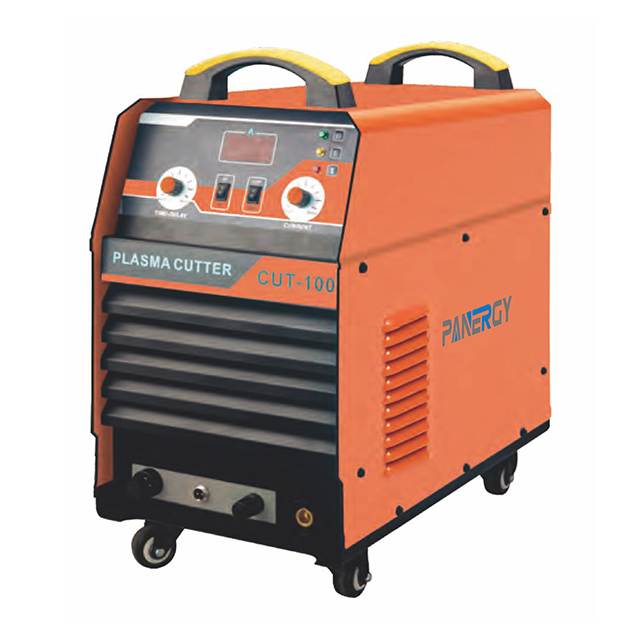
Weight vs. Power: Inverters replace 50/60 Hz magnetic transformers with high-frequency (10kHz–200kHz) switching, reducing machine weight by up to 75% for comparable cutting power.
Operational Stability: Advanced inverters utilize IGBT (Insulated-Gate Bipolar Transistor) technology over older MOSFET designs, minimizing the risk of cascading electrical failures under heavy loads.
True Cutting Capacity: When sizing an inverter air plasma cutter, buyers must differentiate between "edge start" capacity and "pierce" capacity, as the latter is typically half of the former.
Power Agility: Models equipped with Power Factor Correction (PFC) are practically mandatory for field use, allowing reliable operation on generator power and fluctuating line voltages.
To appreciate modern cutting technology, we must look at how legacy machines operate. Traditional machines rely on massive step-down transformers to convert high-voltage wall power into usable cutting current. They utilize large copper coils wrapped around heavy magnetic cores. Because these systems operate at standard grid frequencies of 50 or 60 Hz, the physical components must be exceptionally large to handle the magnetic flux without overheating.
Modern equipment changes the rules of power conversion. Instead of stepping down raw AC power directly, an inverter rectifies the alternating current into direct current. It then feeds this DC power through high-speed microprocessors and solid-state switches. These components invert the power back into a usable form at tens of kilohertz—typically ranging from 10 kHz to 200 kHz. This high-frequency switching allows the machine to precisely manipulate the cutting arc hundreds of times faster than older systems.
The dramatic weight reduction in modern equipment comes down to simple physics. A transformer's physical size is inversely proportional to its operating frequency. Because an inverter operates at frequencies thousands of times higher than standard grid power, it requires drastically smaller magnetic components. The heavy copper coils disappear. Massive aluminum heat sinks are replaced by compact, fan-cooled arrays. This mathematical reality is why high-frequency systems feel hollow compared to traditional alternatives.
You cannot ignore the business implications of equipment weight. In most fabrication shops, labor accounts for roughly 85% of total manufacturing costs. Traditional 1/2-inch capacity machines frequently exceed 150 lbs, requiring multiple workers or a dedicated forklift just to move them across a job site. By reducing that weight to a manageable 55 lbs, an Inverter Air Plasma Cutter directly impacts your bottom line. Faster setup times, single-operator mobility, and easier truck loading translate to higher daily productivity.
Job site power is rarely perfect. Large motors turning on, multiple welders running simultaneously, or poor grid infrastructure can cause severe voltage spikes and dips. Older machines pass these grid fluctuations directly into the cutting arc, leading to blowouts on corners or inconsistent penetration. Inverter switching speeds are exponentially faster than grid fluctuations. The onboard microprocessors monitor incoming power and compensate for line notching in real-time. This ensures your arc remains stable even when the local power grid struggles.
Cut quality is often defined by what happens to the surrounding metal. Tighter arc control significantly reduces the Heat Affected Zone (HAZ). With advanced software regulating the output, you prevent accidental burn-through on thin-sheet metal. The resulting kerf is much narrower and cleaner. Because the arc concentrates heat precisely where you need it, you will spend significantly less time on post-cut grinding, slag removal, and dross cleanup.
When evaluating a new machine, treat Power Factor Correction (PFC) as a critical baseline feature. PFC-equipped machines actively align the incoming voltage and current waveforms. This allows the system to convert far more incoming amperage into raw cutting power. Consequently, a PFC system reduces the required input current by up to 30%. You can run a powerful cutter on a standard breaker without constantly tripping the panel, a vital advantage in residential garages or remote construction sites.
If you browse popular welding forums, you will inevitably find confused buyers. They often observe that a specific inverter model actually weighs more than a baseline transformer equivalent. This creates skepticism. If the core technology is supposed to reduce weight by 75%, why are some modern machines so heavy? The answer lies in how manufacturers package the technology for commercial use.
The "bare" inverter circuit board and its small magnetic components are incredibly light. However, commercial weight varies wildly due to built-in convenience components. Many top-tier machines feature integrated air compressors, allowing for true portability where you do not need an external air source. Others utilize robust steel roll-cage housings to survive drops, or house heavy-duty PFC modules to handle dirty generator power. These additions quickly stack up the pounds.
We advise buyers to evaluate equipment weight based on "system readiness" rather than the standalone machine. Consider the total load you must carry to complete a job.
System Type | Base Machine Weight | External Equipment Needed | Total Transport Weight |
|---|---|---|---|
Traditional Transformer System | 150 lbs | Air Compressor (50 lbs) | 200 lbs |
Standard Inverter System | 45 lbs | Air Compressor (50 lbs) | 95 lbs |
Inverter System (Built-in Compressor) | 75 lbs | None | 75 lbs |
A slightly heavier machine with a built-in compressor ultimately eliminates the need to haul a separate 50-lb air compressor to a job site. This improves your overall field mobility despite the higher base machine weight.
You must verify the internal components before finalizing any purchase. The industry has largely moved toward Insulated-Gate Bipolar Transistors (IGBT). These modern components handle high-current switching with remarkable efficiency and thermal stability. In contrast, older or ultra-cheap machines use parallel MOSFET configurations. MOSFETs are highly prone to thermal runaway. If one transistor fails, it shifts the entire electrical load to the others, resulting in cascading failures under heavy amperage.
Avoid falling into the "bigger is better" trap. Purchasing an oversized machine to cut thin gauge steel often results in overly wide kerfs and messy edges. You must evaluate the machine based on your most common material thickness. When shortlisting a specific Inverter Air Plasma Cutter, explicitly check the pierce capacity rather than just the edge start capacity to ensure the unit fits your actual production workflow.
Edge Start Capacity: The maximum thickness a machine can sever if you start the arc at the outside edge of the metal.
Pierce Capacity: The maximum thickness a machine can punch straight through without blowing molten metal back into the torch tip.
As an industry standard, a machine's pierce capacity is generally only 50% of its advertised edge start capacity. Always size your equipment based on the pierce rating.
Understand how manufacturers define duty cycles to avoid frustrating thermal shutdowns. Duty cycle is strictly calculated based on a 10-minute window of operation. For example, if a machine boasts a 60% duty cycle at 60A, it means you get exactly 6 minutes of continuous cutting at that amperage. After those 6 minutes, the machine requires 4 minutes of uninterrupted cooling time. Exceeding this limit regularly will degrade the internal electronics over time.
It is easy to focus on the retail price of replacement nozzles and electrodes. However, savvy buyers shift their focus to the Cost Per Hour (CPH) metric. You calculate this by taking the Total Consumable Cost and dividing it by your Arc-on Hours. Advanced high-frequency equipment protects consumables better than older machines. You will often find that shields and swirl rings outlast your electrodes by a factor of 20. Evaluate how efficiently the machine manages gas flow, as this dictates your true operational expense.
You must acknowledge the inherent trade-offs of switching to modern electronics. Inverters are highly sophisticated machines packed with sensitive printed circuit boards (PCBs). They are significantly more susceptible to environmental damage than rudimentary transformers. Metallic grinding dust, heavy moisture, and corrosive airborne particles can bridge electrical connections inside the casing, leading to catastrophic short circuits.
Because these machines pack massive cutting power into small chassis, they rely heavily on forced-air cooling. Maintenance routines must prioritize unobstructed cooling vents. You should frequently blow out the interior of the machine using clean, dry compressed air. A blocked heat sink or a failing cooling fan will cause the system to overheat rapidly, bypassing built-in thermal protections if the sensors are compromised by debris.
Modern systems handle standard voltage fluctuations beautifully, but they cannot survive massive electrical shocks. We strongly recommend implementing industrial-grade surge protection. Catastrophic power surges on unregulated job sites—especially those running massive rotary equipment or faulty generators—can easily fry complex internal PCB boards. Ensuring a clean, well-regulated power supply is non-negotiable for equipment longevity.
An Inverter Air Plasma Cutter represents the modern industry standard for metal fabrication. It heavily outperforms brute-force, stationary transformer setups by prioritizing cut speed, portability, and precise arc control. While they require slightly more attention regarding environmental dust and power surges, the operational benefits far outweigh the maintenance trade-offs.
When filtering your shortlist, evaluate your primary input power first. Determine whether you need single-phase or three-phase compatibility, and check for PFC if you rely on generators. Next, select a machine based on its true pierce capacity rather than inflated edge-start marketing numbers. Finally, insist on internal IGBT topology to ensure long-term stability under heavy use.
Before requesting a vendor demo or selecting a specific amperage class, audit your actual "arc-on" time and typical metal thickness. Knowing your exact daily requirements prevents you from overspending on unnecessary capacity while ensuring your cuts remain clean and efficient.
A: Yes, provided the plasma cutter is equipped with Power Factor Correction (PFC). PFC manages the inherently "dirty" and fluctuating voltage outputs of standard generators. Without PFC, these fluctuations can easily trip your generator's breakers or permanently damage the inverter's sensitive circuit boards.
A: Not necessarily. Advanced inverters allow operators to dial down the amperage precisely when cutting thin materials. This flexibility helps you avoid the wide kerf, excessive slag, and thermal distortion typically associated with oversized, unregulated transformer machines.
A: Usually, rapid consumable wear points to moisture or oil in the air supply, not a flaw in the inverter itself. Inverter air plasma cutters require exceptionally clean, dry compressed air. Proper air filtration is essential to maintain the high-frequency arc and protect the torch's hafnium electrode from premature failure.
