


Views: 0 Author: Site Editor Publish Time: 2026-05-21 Origin: Site


Stopping mid-cut to wait for an undersized air compressor to catch up is deeply infuriating. It ruins the clean cut edge and completely disrupts your entire shop workflow. Most novice operators view their air supply merely as a tool to create the initial plasma arc. However, it also acts as the critical cooling mechanism during the post-flow phase. This specific cooling period directly dictates how long your torch consumables actually survive. We designed this comprehensive guide to solve your air supply sizing problems once and for all. You will learn a strict, math-based framework for sizing a shop air compressor. We will show you exactly how to match your compressor capacity to your daily cutting volume. Ultimately, you will safely avoid the hidden dangers of wet air and the severe limitations of low CFM outputs.
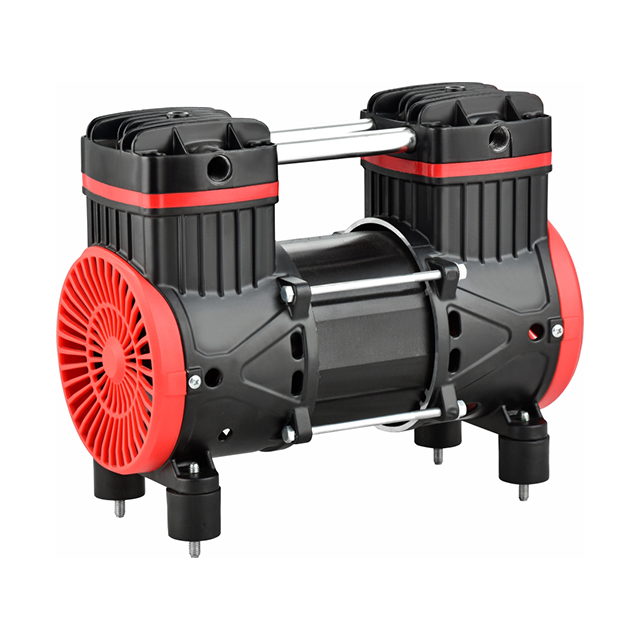
The Golden Multiplier: Always size your compressor to deliver 1.5x the CFM (Cubic Feet per Minute) required by your plasma cutter for manual work, and 2x to 2.5x for CNC applications.
CFM > PSI: While high pressure (PSI) is necessary for thrust, sustained airflow (CFM/SCFM) is the actual bottleneck that dictates whether you can execute continuous cuts.
Filtration is Non-Negotiable: A compressor large enough to run continuously will generate hot, wet air. Without proper moisture separation, water will instantly ruin your torch consumables.
Multi-Process Efficiency: Compact 3-in-1 machines like the CT-416 Inverter Plasma Cutter Welder require carefully matched 20–30 gallon setups to balance shop footprint with post-flow cooling demands.
Many beginners make a classic mistake when setting up their shop. They assume a cheap 6-gallon pancake compressor handles metal cutting perfectly fine. This assumption fails rapidly in practice. Small tanks empty within a few seconds of triggering the torch. You experience immediate pressure drops. The arc stutters, wanders, and ultimately dies. Worse, the lack of air burns out your consumables instantly.
You must understand the distinct specifications of air supply. Manufacturers list two primary metrics on every compressor. You must evaluate both metrics to ensure continuous operation.
Pressure (PSI/Bar): Pressure provides the physical force required for cutting. It blows away the molten dross from the kerf. Most 20-50A cutters require a steady 80 to 90 PSI at the air inlet. Pressure gives the plasma jet its stiffness.
Volume (SCFM): Standard Cubic Feet per Minute dictates your system sustainability. SCFM measures actual air volume delivered under specific climate conditions. It remains the only reliable metric for compressor shopping. If your CFM drops, your cut fails regardless of static pressure.
Industry professionals rely on a simple scalability rule. Standard manual cutting requires the compressor output to be 1.5x the cutter requirement. For example, if your cutter needs 4 CFM, your compressor must deliver 6 CFM. Heavy-duty applications or long-drag cuts require a 2x buffer. This multiplier ensures the motor rests occasionally and prevents severe overheating.
Multi-process machines are explicitly designed to save space. They preserve your working capital by combining tools. However, miscalculating the air requirements negates these benefits entirely. You cannot weld and cut efficiently without a properly sized air supply. Starving a combination unit of compressed air severely limits its performance.
Consider the typical demands of a 40A or 50A plasma cutting module. These modules often reside within popular multi-process inverter units. As a baseline, expect a standard requirement of roughly 4 to 5 CFM at 60-80 PSI. This volume handles medium steel plate effectively.
We highly recommend sizing your compressor carefully for these combo units. To run a CT-416 Inverter Plasma Cutter Welder efficiently, you need adequate airflow. You must pair it with a compressor outputting at least 6.5 to 7.5 CFM at 90 PSI. This specific matching prevents excessive motor cycling. It ensures the CT-416 Inverter Plasma Cutter Welder receives steady, continuous cooling air.
The cost of under-sizing your compressor is severe. Starving an inverter cutter of air directly causes the torch tip to overheat. The internal hafnium insert melts almost immediately under low airflow. This catastrophic failure drives up your consumable replacement costs significantly. You will spend more money replacing burnt nozzles than you saved on a tiny compressor.
Your compressor tank acts exactly like a battery. It buffers the critical gap between pump output and immediate torch demand. Your plasma cutter consumes air rapidly during an active cut. The compressor pump cannot always keep up instantly. The reservoir stores pressurized air to seamlessly bridge this specific gap.
We classify tank capacities based on actual fabrication environments. Choosing the correct tier prevents frustrating workflow interruptions.
User Profile | Minimum Tank Size | Typical Application |
|---|---|---|
Light DIY / Auto Body | 20 to 30 Gallons | Short cuts, bracket fabrication, sheet metal work. |
Heavy Fabrication | 60 to 80 Gallons | Long-run cuts, continuous manual cutting, thick plate. |
Automated / CNC | 80+ Gallons (Two-Stage) | 100% duty cycle cuts, automated plasma tables. |
Many operators fall victim to the "post-flow" trap. Plasma cutters continue to flow air for 10 to 30 seconds after you release the trigger. This post-flow cools the torch internals safely. Small tanks drain entirely during this crucial cooling phase. If the tank empties, the torch overheats and warps.
Some hobbyists use a budget expansion hack. They daisy-chain auxiliary air tanks to their main system. People often use repurposed propane cylinders or old scuba tanks to extend run time. This method successfully delays the initial pressure drop. However, it comes with strict caveats. It does not fix a fundamentally inadequate pump CFM. Once the auxiliary tanks finally empty, your undersized pump will run continuously and eventually overheat.
Thermodynamic realities govern all compressed air systems. A compressor running at its maximum duty cycle generates intense heat. Hot compressed air easily holds significant moisture. This hot, wet air routinely bypasses standard water traps. The moisture travels down the line and condenses directly inside your plasma torch. Water entering the plasma arc destroys cut quality instantly.
You must prioritize filtration and cooling equally. We break down the setups based on application intensity.
Standard Setups: Install coalescing filters directly in the air line. Place them with auto-drains as close to the cutter inlet as possible. This catches residual liquid right before it enters the machine.
High-Volume/CNC Setups: You must introduce an After-cooler. This device drops air temperatures to ambient before the air ever hits the main tank. Next, add a Refrigerated Air Dryer to extract all remaining humidity.
Your shop piping layout drastically affects actual air delivery. Never use standard PEX tubing directly out of the compressor pump. The intensely hot air weakens the plastic structure, causing dangerous ruptures.
Follow strict sizing standards for your shop air lines. Use 3/8-inch copper or rigid aluminum piping for runs under 75 feet. You must scale up to 1/2-inch piping for runs extending over 75 feet. Larger internal diameters minimize friction. This prevents massive pressure drops across long shop distances.
We built a structured framework to guide your final purchase decision. Evaluating implementation considerations properly saves you from costly equipment mismatch.
The 110V Portable Single-Stage class maxes out around 120 PSI. These units remain highly suitable for light, intermittent sheet metal work. They excel in environments where noise and portability are prioritized over raw power. When shopping this category, look for quiet-series units rated under 60 dB.
The 220V Stationary Two-Stage class provides serious industrial power. These robust machines are easily capable of 175 PSI. They are absolutely mandatory for cutting heavy plate steel or running CNC tables. You also need this class for environments where multiple mechanics run air tools and plasma cutters simultaneously.
Do not ignore noise and safety compliance. Continuous exposure to 85+ dB noise requires mandatory hearing protection. Investing upfront in a quiet-series compressor improves overall shop safety. It also makes daily communication across the workshop much easier.
Buying a slightly oversized compressor always saves money long-term. It remains significantly cheaper than constantly replacing ruined plasma consumables. Proper airflow guarantees a stable arc, clean edges, and extended torch life. You must view the compressor as the heart of your cutting operation, particularly when powering a multi-process unit like the CT-416 Inverter Plasma Cutter Welder, which requires consistent air pressure to maintain its high-precision cutting and welding performance.
Your next steps are straightforward. First, check your plasma cutter manual for its specific CFM requirement. Second, multiply that baseline number by 1.5 to find your minimum compressor target. Finally, allocate at least 15% of your total air system budget strictly to moisture filtration. Complete these steps before you ever fire up the torch.
A: Technically yes, but only for 5-10 seconds of cutting. You must then wait several minutes for the pressure to rebuild. We highly discourage this practice. Poor post-flow cooling causes immediate and severe consumable damage. You will spend more replacing ruined torch tips than you would on a larger compressor.
A: CNC tables execute long, continuous cuts with 100% duty cycles. They demand immense air volume. You must supply 2x to 2.5x the CFM of manual cutting requirements. Furthermore, CNC setups mandate aggressive moisture control. You must install after-coolers and refrigerated air dryers to prevent condensation.
A: Insufficient air pressure often causes this defect. The weak air jet fails to blow out the molten metal. Alternatively, excessive moisture in the lines distorts the plasma arc. You should check your inline coalescing filter immediately. Drain any trapped water and verify that your delivery PSI meets specifications.
