


Views: 0 Author: Site Editor Publish Time: 2026-05-21 Origin: Site


Selecting the proper drive system for your facility presents a critical balancing act. Plant managers constantly weigh initial Capital Expenditure (CAPEX) against long-term Operational Expenditure (OPEX). Neither technology holds universal superiority in industrial pneumatics. Choosing incorrectly often leads to wasted energy, excessive downtime, or bloated upfront costs. The correct choice depends entirely on your specific duty cycle, available maintenance resources, and required pressure flexibility.
Our goal is to strip away marketing bias. This guide provides plant managers and engineers with a rigorous, evidence-based framework. You will learn exactly how to evaluate your needs. We provide the data necessary to choose between a Direct-Connected Air Compressor and a traditional belt-driven system. We evaluate mechanical baselines, debunk industry myths, and offer a practical decision matrix.
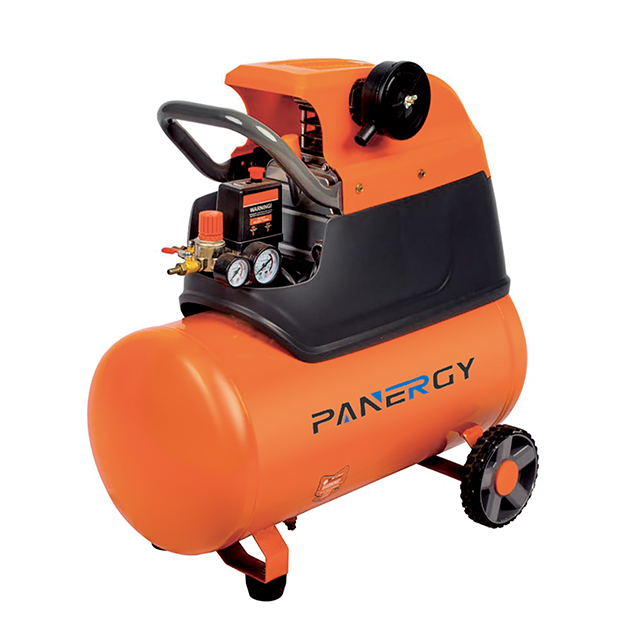
Heavy-Duty/Continuous: A Direct-Connected Air Compressor is the industry standard for 24/7 continuous operations and systems over 50 HP due to zero transmission loss.
Flexibility/Budget: Belt-driven compressors offer lower initial costs and the unique ability to manually adjust CFM/PSI ratings via pulley changes, ideal for fluctuating facility needs.
Maintenance Trade-offs: Belt systems require frequent, low-skill interventions (tensioning every 500-1,000 hours), whereas direct drives require infrequent but highly specialized, costly repairs if a failure occurs.
The Sizing Rule: Always calculate your facility's total required CFM and add a 25% to 30% redundancy margin before finalizing a drive system choice.
Understanding the engineering differences between drive systems simplifies the procurement process. How a machine transmits power directly dictates its efficiency, lifespan, and maintenance schedule. We focus on how these physical connections impact your daily operations.
In a direct-drive configuration, engineers link the motor shaft directly to the compressor crankshaft. This creates a true 1:1 power transmission ratio. When the motor turns one revolution, the compressor air end also completes exactly one revolution. Manufacturers typically pair these systems with 4-pole motors. These motors run at lower, fixed speeds ranging from 150 to 1,600 RPM.
This straight-line architecture eliminates transmission energy loss entirely. Power flows straight from the power source to the compression mechanism. Additionally, removing pulleys and belts reduces the physical footprint. A Direct-Connected Air Compressor easily fits into tighter, space-restricted industrial utility rooms.
Belt-driven units rely on a system of V-belts and pulleys. These components connect the electric motor to the air end. Engineers typically pair this architecture with 2-pole motors. These motors operate at much higher speeds, typically between 800 and 14,000 RPM.
The standout feature of this design is mechanical ratio manipulation. Changing the diameter ratio between the motor pulley and the compressor flywheel alters the machine's operating speed. This mechanical adjustment directly shifts the delivered Cubic Feet per Minute (CFM) and Pounds per Square Inch (PSI). It provides mechanical speed adjustments without needing complex electronic drives.
Comparing these two technologies requires a structured approach. We evaluate them across five critical industrial performance categories. This feature-to-outcome perspective clarifies which system aligns best for your facility.
Direct: These systems achieve 100% power transfer. There is absolutely no friction loss between the motor and the air end. This makes direct connections highly efficient for continuous, high-CFM demands. Every kilowatt of electricity translates directly into compressed air.
Belt: Belt transmission inherently loses roughly 3% to 5% of energy. Friction, heat generation, and unavoidable "belt slip" consume this power. This loss occurs even when technicians perfectly align and properly tension the belts.
Direct: You face much lower routine maintenance demands. There are no belts to align or replace. However, rigid connections create different risks. Localized faults, such as a motor bearing failure, can easily travel down the shaft. This causes cascading internal damage. Teardowns require specialized, highly trained technicians.
Belt: Expect high-frequency routine maintenance. Technicians must check belt wear and tension every 500 to 1,000 hours. However, repairs remain straightforward and compartmentalized. A broken belt will not destroy the motor. In-house maintenance teams can usually handle these repairs using basic hand tools.
Direct: These machines feature enclosed designs featuring minimal exposed moving parts. They remain highly resilient in harsh industrial environments. They handle extreme cold, intense heat, heavy ambient dust, or corrosive salt exposure exceptionally well.
Belt: Belts remain highly sensitive to ambient conditions. Extreme temperatures cause rubber compounds to crack or stretch. High humidity accelerates belt degradation. These environmental factors lead to rapid tension fluctuations and increased slipping.
Direct: You buy a fixed output. The mechanical ratio cannot change. If your facility pressure requirements change drastically, you face two expensive choices. You must purchase an entirely new compressor, or you must retrofit a Variable Frequency Drive (VFD) panel.
Belt: This system proves highly adaptable. If your pneumatic tooling requirements shift, your technicians can respond quickly. They can alter the machine's operating pressure and CFM rating simply by swapping pulley sizes. This process takes minutes and costs very little.
Direct: The rigid coupling creates a direct path for vibration. If technicians fail to properly isolate the base, the machine can amplify structural vibration. In piston models, direct drives often run louder due to higher operating speeds and rigid mounts.
Belt: Rubber V-belts act as excellent physical buffers. They actively absorb shock loads during startup and operation. They naturally dampen vibration between the motor and the compressor pump. This buffering effect makes belt-driven piston compressors notably quieter than their direct counterparts.
Evaluation Summary Chart
Performance Metric | Direct-Connected Air Compressor | Belt-Driven Air Compressor |
|---|---|---|
Energy Transfer | 100% (Zero friction loss) | 95% - 97% (3-5% friction/slip loss) |
Maintenance Style | Infrequent but highly specialized | Frequent but low-skill (in-house) |
Harsh Environments | Highly resilient (enclosed parts) | Sensitive to heat, humidity, and dust |
Output Flexibility | Fixed output (Requires VFD to change) | Highly adaptable (Pulley swaps) |
Vibration Control | Rigid coupling (Can amplify vibration) | Belts absorb shock and dampen vibration |
Industry myths often complicate the procurement process. Plant managers sometimes rely on outdated assumptions. We must address these hidden mechanical truths to ensure accurate facility planning.
Reality Check: You must distinguish between "true direct drive" and "gear-driven" systems disguised as direct. True direct systems connect 1:1. Gearboxes, however, utilize internal gears to manipulate speed. These gearboxes require idle load energy. They must maintain 2.5 to 4 bar of internal pressure just for internal gear lubrication. This requirement wastes thousands of kWh annually during unloaded hours. Always verify if the machine is a true direct coupling or a gear-driven hybrid.
Reality Check: Belt slip does cause minor energy loss. However, it also acts as a brilliant mechanical fail-safe. Consider a scenario involving a sudden heavy shock or a mechanical pump lock. A rigid coupling will snap the shaft or destroy the motor. In a belt system, the belt simply slips or snaps. This deliberate weak point protects your expensive motor and air end from catastrophic overload.
Reality Check: Many engineers assume direct drive represents the only modern choice. This is false. For sub-30 HP applications, commercial garages, and medium-duty fabrication shops, belts reign supreme. Facilities lacking heavy capital budgets rely on them. Modern industrial V-belts use advanced synthetic compounds. They remain highly reliable, simple to troubleshoot, and cost-effective.
Selecting the ideal equipment requires matching the technology to your operational reality. Use this shortlisting logic based on specific use cases.
Your application requires continuous, 24/7 heavy industrial operation. The duty cycle exceeds 80%.
The required system size exceeds 50 HP. Large machines benefit massively from zero transmission loss.
You operate in extreme, harsh ambient environments. Heavy dust or extreme temperatures will quickly destroy rubber belts.
You want to prioritize OPEX (long-term energy savings) over initial CAPEX. The 3-5% efficiency gain saves massive amounts of electricity over a decade.
You operate smaller machinery. Your facility requires systems under 30 HP.
Your production involves intermittent duty cycles rather than continuous 24/7 runs.
Your facility's pressure requirements frequently change. You need the ability to manually adjust CFM output quickly.
You have a strict initial CAPEX limit but maintain a capable, responsive in-house maintenance crew.
You require maximum shock-load absorption. Heavy automotive or heavy fabrication work often generates sudden demand spikes.
Once you understand the mechanical differences, you must apply them to your exact facility needs. Follow these concrete steps before finalizing your equipment specifications.
Audit Total CFM Needs: Do not guess your air volume requirements. Apply the industry sizing rule. Calculate the maximum simultaneous CFM of all pneumatic tools running at once. Once you have that peak number, add a 25% to 30% buffer. This redundancy margin accounts for inevitable system leaks and future tooling expansion.
Evaluate Internal Resources: Be ruthlessly honest about your facility's preventative maintenance culture. Belt drives require disciplined care. If your staff routinely skips weekly equipment inspections, avoid belt-driven models entirely. Neglected belts lead to poor performance and sudden snapping. Choose a enclosed direct drive if your maintenance culture is reactive rather than preventative.
The "better" drive system is strictly contextual. Neither technology solves every industrial problem. A Direct-Connected Air Compressor undoubtedly wins on reliability, energy efficiency, and heavy-duty 24/7 performance. Conversely, belt drives offer unmatched operational flexibility, mechanical buffering, and highly budget-friendly entry points.
Audit your maximum simultaneous CFM needs carefully. Evaluate the discipline of your internal maintenance crew. We strongly prompt you to consult with a certified compressed air specialist. They can audit your specific facility environment and power availability before you issue a Purchase Order.
A: It depends heavily on maintenance and duty cycle. However, direct models generally boast longer lifespans. They feature fewer moving external parts. Enclosed designs protect the coupling from dust and heat. This minimizes environmental wear compared to exposed rubber belts.
A: You cannot alter pressure mechanically via parts like a belt system. Changing output requires electronic integration. You must install a Variable Frequency Drive (VFD) or adjust software settings within the machine's rated limits.
A: You should conduct a standard visual inspection every 500 to 1,000 hours. Actual replacement schedules depend on measurable wear, ambient operating temperatures, and alignment quality. High heat or poor alignment drastically shortens belt life.
A: You must clarify the difference between piston and rotary screw technologies. In piston models, direct drives can be much louder due to rigid mounts and faster motor speeds. However, in rotary screw machines, true direct-connected models are often the quietest options available.
