


Views: 0 Author: Site Editor Publish Time: 2026-09-30 Origin: Site


Tired of ruined cuts on your steel fabrication projects? A 100A plasma system requires exact precision. Unmatched parameters will quickly waste expensive raw materials and bring your shop floor to a standstill. In this comprehensive guide, you will learn to perfectly balance current, air pressure, and material thickness to achieve surgical cuts every time you pull the trigger.
A 100A industrial system can comfortably pierce 1-inch or 25mm steel and sever up to 1.5-inch or 38mm steel when parameters are fully optimized.
Amperage dictates the machine's ability to melt the steel, while air pressure clears the molten metal. Both must scale proportionally with material thickness.
Clean and dry air is just as important as your pressure settings. Moisture remains the primary enemy of plasma consumables.
Travel speed acts as the critical bridge between your current and air pressure settings to achieve a completely dross-free edge.
Modern inverter technology allows for highly precise and infinitely adjustable current control to match specific heavy fabrication requirements.
Selecting the correct amperage capacity is the foundational step in optimizing your daily workflow. For commercial environments, a 100A machine provides the exact balance of brute force and operational versatility required for continuous production.
The transition from a standard 45A or 60A hobbyist cutter to a 100A system represents a significant leap in fabrication capability. Lower amperage machines are generally restricted to cutting thin sheet metal at moderate speeds. In contrast, a 100A unit operates in a highly efficient sweet spot. It possesses the intense thermal energy required to slice through thick structural steel, heavy I-beams, and dense base plates with absolute ease. Simultaneously, operators retain the precision necessary to dial down the current for medium-gauge materials without causing excessive thermal distortion.
Recent industry data reveals a massive shift in mid-sized fabrication facilities across the globe. Shop managers are rapidly replacing outdated transformer models with high-amperage inverter systems. This transition is heavily driven by the rising cost of raw steel and the modern engineering demand for tighter structural tolerances. Today's fabrication landscape simply cannot afford the extensive secondary grinding and labor costs associated with older cutting technology. Consequently, 100A units have become the industry standard for bridging the gap between heavy industrial output and intricate metalwork.
Historically, high-amperage cutters relied on heavy and highly inefficient transformer-based designs. Today, a modern inverter plasma cutter utilizes advanced Insulated Gate Bipolar Transistors to convert and regulate electrical power. This technology switches direct current at incredibly high frequencies. The result is a highly stable and focused arc. Specifically, commercial units now feature a robust 60 percent duty cycle at maximum output and operate on reliable 3-phase 380V power. This precise energy transfer is a mandatory requirement for achieving clean edges on varying thicknesses of steel.
In plasma cutting mechanics, no single parameter operates independently. Achieving a clean and dross-free cut requires balancing three interdependent variables. These are material thickness, electrical current, and air pressure. This relationship forms the core operational framework for any successful welding and fabrication task.
The physical thickness of the mild steel or stainless steel plate serves as the absolute baseline metric for all metal cutting equipment adjustments. Every single setting on the machine must be calibrated according to this specific measurement. A common operator error we see in the field is setting the machine to its maximum output regardless of the material. Forcing 100 amps through 16-gauge sheet metal will result in an unmanageably wide kerf, severe heat-affected zones, and rapid consumable degradation. Conversely, using insufficient amperage on a heavy plate will fail to penetrate the material entirely.
The fundamental physics of this process can be understood through a simple push-and-pull dynamic. Amperage is responsible for generating the intense thermal energy required to melt the steel within the kerf. Meanwhile, air pressure provides the kinetic force necessary to evacuate that molten metal through the bottom of the plate. Think of it this way: if the electrical amperage is the engine generating heat, the compressed air is the exhaust system clearing the waste. If the amperage is too high but the air pressure is too low, the molten steel pools and re-solidifies on the bottom edge. These two forces must remain perfectly balanced to hear that smooth and continuous hissing sound indicative of a perfect cut.
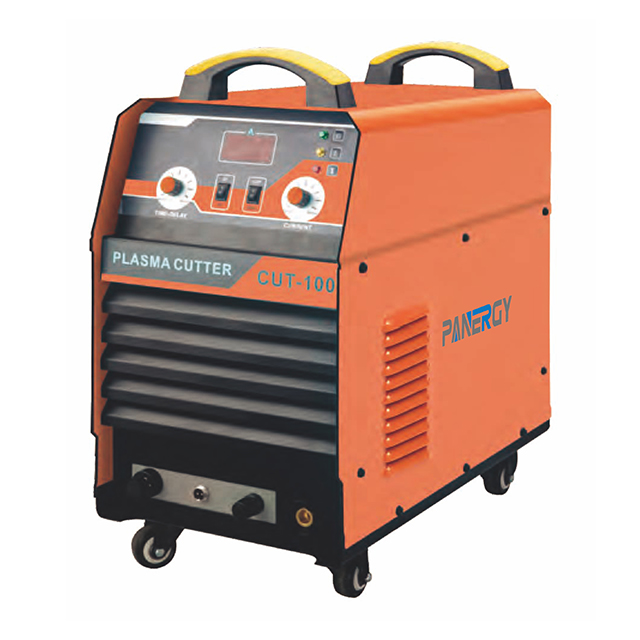
Applying the correct amperage based on material thickness is critical for maximizing both cut quality and consumable lifespan. A 100A machine offers a wide operational range. However, that intense power must be managed deliberately by the operator.
When fabricating thinner materials up to 3/8 Inch, operating the machine at its maximum capacity is counterproductive. High amperage on thin steel introduces excessive heat into the workpiece. This directly leads to severe thermal warping and prematurely erodes the hafnium insert within the electrode. For these lighter materials, operators should dial the machine down to a range of 40A to 60A. This lower setting requires the use of correspondingly smaller nozzle orifices to maintain arc density.
Thick plate steel is exactly where a 100A machine demonstrates its true commercial value. For materials ranging from 1/2 Inch to 1 Inch, the machine should be set between 80A and 100A. It is crucial to distinguish between quality cut capacity and severance capacity. Quality cut capacity refers to the maximum thickness the machine can slice through at a reasonable speed while leaving a smooth edge that requires minimal secondary grinding. For a professional 100A system, this is typically around 1 Inch. Severance capacity refers to the absolute maximum thickness the arc can penetrate, which reaches up to 1.5 Inches, but this will result in a rougher edge requiring substantial cleanup.
Steel Thickness Inch and mm | Recommended Amperage | Approximate Travel Speed |
|---|---|---|
1/8 Inch or 3.2mm | 40A to 45A | 140 to 180 Inches Per Minute |
1/4 Inch or 6.4mm | 45A to 60A | 90 to 120 Inches Per Minute |
3/8 Inch or 9.5mm | 60A to 70A | 50 to 70 Inches Per Minute |
1/2 Inch or 12.7mm | 75A to 85A | 35 to 50 Inches Per Minute |
3/4 Inch or 19.0mm | 90A to 100A | 20 to 30 Inches Per Minute |
1 Inch or 25.4mm | 100A | 10 to 15 Inches Per Minute |
Air pressure and volume are frequently misunderstood variables in metalworking. Proper air management is absolutely critical to ensuring the arc remains focused and the cut edge remains pristine. Using a reliable air plasma cutter demands more than just hooking up a standard garage compressor.
While operators often focus entirely on Pounds per Square Inch, Cubic Feet per Minute is arguably the more critical metric for heavy fabrication. A standard 100A torch typically requires an operating pressure of 70 to 90 PSI. However, to maintain that pressure continuously during a long cut across a large steel plate, the air compressor must be capable of delivering a high volume of air. This volume requirement usually sits between 6.0 and 8.0 CFM. If the compressor lacks adequate capacity, the pressure will drop mid-cut, resulting in a sudden loss of kinetic force and heavy slag accumulation.
A frequent procedural error on the shop floor is setting the air pressure regulator while the machine is idle. This action only measures static pressure. When the torch is triggered and air begins flowing through the long torch leads, the pressure will naturally drop. Regulators must always be adjusted based on dynamic pressure. To execute this correctly, operators should activate the air purge function on their machine and adjust the regulator to the specified PSI while the air is actively flowing through the nozzle.
Furthermore, air volume is completely useless if the air quality is poor. Moisture, compressor oil, and particulate matter are highly destructive to the internal components of the torch. When moisture enters the torch head, it rapidly cools the arc and causes severe sputtering. For any commercial setup, installing inline desiccant dryers or a dedicated refrigerated air dryer is a mandatory investment to protect your equipment.
Even with the correct amperage and air pressure selected, steel fabrication requires continuous refinement to achieve a truly surgical edge. The physical dynamics of a high-amperage steel cutting machine are incredibly intense. At optimal settings, the gas is forced through a tiny nozzle orifice, creating a constricted electrical arc that can reach temperatures exceeding 20,000 degrees Celsius. Managing this concentrated energy requires operators to master travel speed and routine maintenance.
Dross is the re-solidified molten metal that clings to the bottom edge of a cut. It is the most common frustration on the shop floor. However, dross is not a random occurrence. It provides immediate diagnostic feedback about your travel speed and amperage balance. When the torch moves too slowly across the steel plate, the arc begins to search laterally for more metal to consume. This widens the kerf and causes thick, globular dross to accumulate. To fix this low-speed dross, simply increase your travel speed in increments of 5 percent until the edge clears up.
In contrast, if the torch moves too quickly, the arc trails backward. The air pressure does not have enough time to completely blow the molten steel through the bottom of the kerf. This creates a thin and hard line of high-speed dross that effectively welds itself to the bottom edge of the plate. The solution here is to decrease your travel speed to allow the arc to remain perfectly vertical.
Standoff distance directly dictates the voltage of the arc. If the torch is held too high, the arc stretches, the voltage increases, and the cut loses its focused kinetic energy. This results in severe edge beveling and an inability to sever the metal entirely. For a 100A system, the ideal standoff distance is typically between 1/16-inch and 1/8-inch. Handheld operators should utilize drag shields or roller guides to maintain this exact distance mechanically.
Finally, a high-powered system relies entirely on the geometric perfection of its consumables. As the high-velocity air widens the nozzle orifice over time, the arc loses its constriction. A blown-out nozzle will create a wide and sloppy kerf, rendering your perfectly calculated settings useless. Establish a strict inspection routine and always replace the electrode and nozzle together as a matched set.
A 100A system offers immense flexibility. It serves as both a rugged manual tool for custom fabrication and the high-production heart of an automated Computer Numerical Control system. Deciding how to deploy this power depends entirely on your specific workflow and precision standards.
For structural fabricators and mobile repair units, manual operation offers unmatched flexibility. Using a handheld torch allows an operator to navigate complex three-dimensional shapes, cope pipe, and cut structural beams that cannot be laid flat on a cutting bed. When operating manually, fabricators must rely on visual and auditory feedback. The primary challenge of manual cutting is maintaining a consistent travel speed, which requires physical straight-edge guides to prevent human error.
For high-volume production, pairing a 100A industrial plasma cutter with a CNC table transforms raw power into repeatable precision. In a mechanized environment, exact parameter matching is non-negotiable. The travel speed, cutting amperage, and pierce delay must be flawlessly calibrated in the software. Advanced CNC tables utilize Torch Height Control systems that constantly monitor the arc voltage. If the steel plate warps from the heat, the system automatically adjusts the torch height to maintain that critical 1/16-inch standoff distance.
Purchasing heavy-duty metal fabrication equipment is a significant capital investment. To ensure you select a reliable machine that can withstand the rigorous demands of daily use, buyers must evaluate specific technical specifications rather than just looking at the maximum output.
The duty cycle is the absolute most critical metric of a machine's durability on the shop floor. It represents the percentage of a ten-minute period that the machine can continuously cut before overheating. For commercial fabrication, look for a machine boasting at least a 60 percent duty cycle at 100 Amps. Even better, look for units that offer a 100 percent duty cycle at 80 Amps. This ensures the equipment can handle long continuous cuts on thick structural plates without triggering thermal overload protections.
The method by which the machine initiates the arc is also vital. You should specifically look for a Non-High Frequency Blowback Pilot Arc system. Older machines use High Frequency to jump the gap, which generates severe electromagnetic interference that can scramble nearby computers. A Blowback Pilot Arc uses a mechanical internal short-circuit to create the initial spark, allowing the torch to easily pierce through heavy rust and thick paint without losing the arc.
A truly professional 100A inverter unit is designed with future expansion in mind. Ensure the power supply features a built-in CNC port. This port provides a safe divided voltage signal that allows an automated Torch Height Controller to interface with the power supply without requiring dangerous internal wiring modifications.
Mastering a 100A plasma system requires patience, practice, and a deep understanding of the delicate balance between material thickness, electrical amperage, and air dynamics. Taking just five minutes to test your parameters on a piece of scrap steel will save you hours of grueling post-cut grinding. By investing in reliable equipment and applying these optimization techniques, you can transform a brute-force cutting tool into a precision instrument. If your shop is ready to upgrade its structural fabrication capabilities, explore the robust selection of high-performance equipment at Panergy Machinery to find the exact industrial system that meets your heavy production demands.
Typically, a high-quality 100A machine can clean-cut 1-inch to 1.25-inch mild steel with excellent edge quality. It has a maximum severance capacity of about 1.5 inches, though severance cuts will be slower, produce heavy dross, and require extensive edge grinding.
You need an industrial-grade air compressor capable of delivering at least 6.0 to 8.0 CFM at 90 PSI continuously. A 60-gallon tank or larger is highly recommended for commercial fabrication to prevent pressure drops and ensure consistent kinetic force behind the arc.
Beveling is almost always caused by worn consumables, specifically an out-of-round nozzle orifice that distorts the gas flow. It can also occur if you are cutting too fast for the selected amperage, or if your torch standoff distance is set too high above the steel plate.
No. A true 100A system draws significant electrical current and requires a heavy-duty industrial power supply. Depending on the manufacturer, these machines typically require single-phase 220V or 240V on a dedicated high-capacity breaker, or commercial 3-phase 380V or 480V wiring.
While the required PSI remains relatively similar, stainless steel is highly susceptible to oxidation, which turns the cut edge black and brittle. For optimal stainless steel cuts, operators must ensure perfect air quality with zero moisture or utilize secondary shielding gases like Nitrogen to protect the cut edge from atmospheric contamination.
When cutting 1/2-inch mild steel at an optimized setting of 75A to 85A, the ideal travel speed generally falls between 35 and 50 Inches Per Minute. You must watch the spark trail beneath the plate to ensure it ejects at a slight 15-degree trailing angle, which confirms your speed is perfectly dialed in.
Consumable lifespan depends heavily on your pierce count and air quality rather than just cutting time. In a heavy commercial setting, operators should inspect the nozzle and electrode every two to three hours of continuous arc time. If the hafnium pit in the electrode exceeds 1/16-inch deep, or if the nozzle hole is no longer perfectly round, both parts must be replaced immediately.
