


Views: 0 Author: Site Editor Publish Time: 2026-10-21 Origin: Site


Hearing the familiar, rhythmic chugging of an Air Compressor kicking on is a comforting sound in any busy workshop or automotive garage. However, noticing a sudden spray of mist from your expensive nail gun is a glaring warning sign. Worse yet is discovering a puddle of murky, rust-tinted sludge forming beneath the machine. These pneumatic powerhouses are incredibly versatile. Yet, they face a persistent and often invisible enemy: condensation.
Many operators either forget or completely ignore the crucial maintenance step of draining their equipment. This simple task is not merely a casual suggestion buried in a user manual. It is a fundamental safety requirement. This comprehensive guide explores the physical science behind moisture accumulation, the catastrophic risks of neglecting it, and the actionable steps you can take to keep your valuable equipment running safely for years to come.
Moisture is Inevitable: The physical act of compressing ambient air naturally squeezes out atmospheric humidity. This converts invisible vapor into liquid water directly inside your storage vessel.
Rust is the Silent Killer: Failing to perform routine drainage leads to rapid internal corrosion. This systematically weakens the steel structure and creates a severe risk of explosive failure.
Tool Protection: Water traveling through pneumatic lines strips essential lubrication from expensive tools. It irreversibly damages sensitive finishes in spray painting applications.
Daily Maintenance is Best: Industry experts and equipment manufacturers universally recommend purging the moisture at the end of every single working shift.
Upgrades Save Time: Replacing standard factory petcocks with automatic electronic valves entirely eliminates human error and dramatically simplifies daily maintenance protocols.
To truly understand why water inevitably pools inside your equipment, it is helpful to look at the basic thermodynamics of fluid mechanics. When the pump draws in ambient air, it acts like a giant vacuum for atmospheric humidity. It does not selectively pull in just oxygen and nitrogen. It drags in all the suspended water vapor present in your workspace.
Specifically, the mechanical process of forcing a massive volume of humid air into a confined space generates a tremendous amount of thermal energy. As this highly pressurized, scorching hot air exits the pump head and enters the relatively cooler environment of the storage cylinder, a rapid physical reaction occurs. The compressed air hits its dew point.
Because cool air cannot hold as much moisture as hot air, the sudden temperature drop forces the trapped water vapor to condense. It transitions rapidly from a gas into liquid droplets. These droplets then run down the interior walls and pool at the absolute bottom of the belly due to gravity. Furthermore, it is critical to recognize that this physical phenomenon happens in every single machine. Coastal areas with heavy humidity will naturally generate a larger volume of liquid. However, even machines operating in arid desert climates will accumulate condensation over time.
Recent market analysis reveals a massive shift toward preventative maintenance and automation within the industrial pneumatic sector. Facility managers are actively moving away from relying on human memory for daily manual checks. Driven by increasingly stringent workplace safety regulations, the industry is witnessing a surge in the adoption of automated moisture management systems. Modern operations prioritize zero-downtime compliance. Engineers now focus on predictive analytics, utilizing smart sensors to monitor internal humidity and tank health long before structural degradation occurs. This evolution highlights a critical reality. Moisture control is no longer just a basic chore; it is a core component of facility risk management.
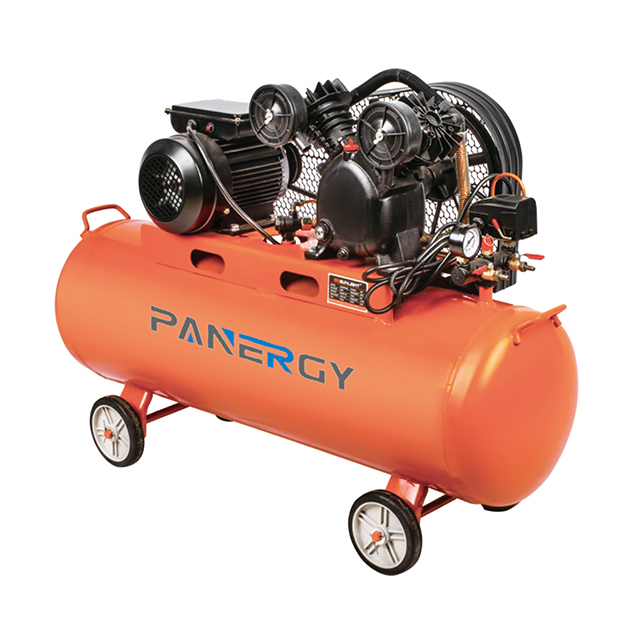
The vast majority of standard pressure vessels are forged from high-strength carbon steel. While the exterior is beautifully protected by thick powder coating, the interior is often bare, exposed metal. When liquid water is allowed to sit stagnant inside this steel belly in the presence of highly oxygenated air, oxidation begins almost immediately. Over time, this rust relentlessly eats away at the molecular structure of the metal from the inside out. Because this degradation happens entirely in the dark, operators are usually completely unaware of the structural decay until it is too late.
Building on the dangers of internal rust, operator safety remains the single most critical reason for this daily chore. A severely corroded Air Compressor Tank holding 120 to 175 PSI of internal pressure is a ticking time bomb in your garage. When the steel walls become too thin to contain the outward force, the metal suffers from fatigue and violent rupture. Real-world case studies from industrial safety boards frequently document terrifying instances of neglected pressure vessels exploding, sending heavy metal shrapnel flying across workshops and causing fatal injuries.
Moisture accumulation does not politely isolate itself to the bottom of the cylinder. As the air demand increases, high-velocity airflow picks up these moisture droplets. The air carries them through the hose and directly into your connected equipment. For mechanical tools like orbital sanders, die grinders, and impact wrenches, this water acts as a destructive solvent. It washes away the protective pneumatic oil, replacing it with moisture that causes internal bearings to seize and rust. In addition, if you are tackling a delicate automotive paint job, even a microscopic drop of water in the airline will cause blistering and fish-eyes, completely ruining hours of meticulous labor.
Consider the basic volumetric footprint of your machine. If you neglect maintenance for months and the bottom portion of your cylinder fills with stagnant, murky water, you effectively have less physical room to store compressed air. This reduction in usable capacity forces the motor and pump to cycle on and off much more frequently to keep up with your airflow demands. This short-cycling wastes electrical energy, generates excessive thermal wear, and dramatically shortens the operational lifespan of the motor.
Maintenance Status | Internal Tank Environment | Pneumatic Tool Lifespan | Safety Risk Level |
|---|---|---|---|
Daily Drained | Dry, intact high-strength steel walls | Maximized, proper lubrication retained | Low |
Neglected | Heavy liquid pooling, active internal oxidation | Reduced, internal rust and bearing seizure | High (Severe Rupture Hazard) |
When outfitting a professional workspace, operators generally choose between two primary mechanical configurations. A Direct Drive Air Compressor features a motor connected directly to the pump crankshaft. These portable units typically run at blistering speeds, often around 3,400 RPM. Because they run so hot, some moisture may remain suspended as vapor longer, only condensing heavily once the machine is powered down and cools.
In contrast, a heavy-duty Belt Air Compressor utilizes a pulley mechanism to operate the pump at a much slower, more efficient speed. For instance, continuous powerful automotive belt-driven models are engineered to operate well under 1,000 RPM while delivering massive power. These industrial models are built for continuous duty cycles. They run significantly cooler and quieter. Consequently, condensation often occurs immediately as the air enters the storage cylinder.
Despite these thermal differences, the ultimate verdict remains unchanged. The absolute volume of water extracted from the atmosphere is identical for a given CFM and humidity level. Both mechanical designs pull in ambient moisture, and both absolutely require strict, routine drainage to prevent catastrophic corrosion.
When consulting manufacturer guidelines and pneumatic industry standards, the consensus is unanimous. You must purge the moisture at the end of every single working day. Allowing water to sit stagnant overnight gives the oxidation process an immediate foothold. For high-volume production facilities, purging at the end of every shift is the strict standard operating procedure.
This is a subject of frequent debate among mechanical technicians. Leaving your system fully pressurized at 120 PSI overnight occasionally will not instantly destroy the machine. However, long-term storage under maximum pressure places continuous, unnecessary static stress on the valve plates, rubber O-rings, and pipe sealants. Fortunately, purging the water naturally requires opening the bottom valve. This subsequently bleeds off the compressed air. By adhering to a daily drainage protocol, you automatically relieve the static pressure on the system, efficiently hitting two critical maintenance objectives at once.
Safety dictates that all maintenance begins with total power isolation. Turn the pressure switch to the off position and physically unplug the machine from the electrical receptacle. This guarantees the motor will not unexpectedly roar to life while your hands are near the mechanical components or drive belts.
Never attempt to crank open a drain valve when the system is sitting at maximum operating pressure. High-pressure air will force the rusty sludge out at dangerous, explosive velocities. This can cause eye injuries and damage the delicate threads of the valve itself. Instead, use an attached blowgun or gently pull the safety relief valve ring to bleed the pressure down to a manageable 10 to 20 PSI. This provides just enough kinetic energy to push the liquid out without violent force.
Look beneath the lowest point of the steel belly. You will find a small brass fitting known as a petcock. Depending on the design, it may require a counter-clockwise twist by hand or the use of a small wrench. Open the valve slowly. You will first hear the sharp hiss of escaping air, quickly followed by a sputtering stream of water.
For smaller portable units, such as pancake or twin-stack models, the petcock may not sit perfectly flush with the internal water level due to the resting angle of the rubber feet. Gently tilt the entire unit toward the valve to ensure gravity forces every last drop of moisture out. If the unit is going into long-term storage, leave the valve slightly open to allow internal air circulation to dry the metal completely.
For commercial environments or busy workshops, an electronic automatic drain valve is the ultimate fail-safe. These intelligent devices replace the manual petcock and plug directly into a standard wall outlet. They feature a programmable timer, allowing them to open for just a few seconds every hour. This entirely removes human error from the equation, ensuring the interior remains bone dry regardless of operator negligence.
If an electronic timer is overkill for your garage, upgrading to a manual brass ball valve is a highly recommended modification. Factory petcocks use small, fragile wings that hurt your fingers and easily snap off after months of moisture exposure. By installing a 90-degree lever ball valve paired with a braided steel extension hose, you bring the drainage point out from underneath the dirty machine. Investing in these premium Air Compressor Parts transforms a frustrating, knuckle-scraping chore into an effortless one-second task.
It is crucial to understand the distinction between cylinder drainage and downstream line filtration. Refrigerated air dryers, desiccant filters, and inline moisture separators are exceptional components designed to remove humidity from the air after it leaves the machine. This protects your delicate tools. However, they do absolutely nothing to prevent condensation from forming inside the primary storage cylinder. Even with a highly expensive refrigerated dryer installed, your main system still requires daily manual or automated purging.
By the time you observe liquid water exiting your pneumatic tools or blowgun, your system is already in a state of critical flooding. The air intake for the hose is typically located near the top or middle of the cylinder. If water is reaching that height, the bottom has been submerged for a significant period. Irreversible rust damage has already severely compromised the steel.
Some operators slightly crack the petcock, believing the continuous leak will push water out as it forms while they work. This is a severe mechanical error. An open valve acts as a continuous, intentional air leak. It artificially increases the CFM demand on the system. This forces the pump to run continuously without ever reaching its cut-out pressure, resulting in catastrophic overheating, oil degradation, and premature burnout of the electric motor.
Managing condensation is not an optional accessory to pneumatic work. It is the very foundation of equipment longevity and operator safety. The physical reality of compressing air guarantees that water will continually invade your system, bringing with it the silent, destructive force of rust.
Whether you are running a small portable unit for weekend trim carpentry or relying on a massive industrial machine to power a commercial fabrication shop, taking thirty seconds at the end of your day to twist that valve pays massive dividends. It prevents dangerous structural failures, saves hundreds of dollars in ruined pneumatic tools, and ensures your motor runs at peak efficiency.
Do not wait for rust to compromise your safety. Check your equipment today, purge the moisture, and consider upgrading your valves to make this essential daily habit as seamless as possible. For professional-grade solutions engineered to withstand demanding environments, explore the robust lineup of equipment and accessories at Panergy Machinery to find the perfect fit for your operational needs.
If left entirely unmaintained, the pooled water will cause the inside of the high-strength steel to rust, systematically weakening its structural integrity. Eventually, this neglect leads to a catastrophic and explosive rupture. It also ruins pneumatic tools due to water wash-out and causes a burned-out motor from severely reduced storage capacity.
This indicates that condensation has built up to such an extreme level that it is bypassing the upper air outlet and traveling directly into your air hose. You must power down and purge the machine immediately. To further protect your tools, consider installing an inline moisture separator downstream.
Yes, leaving the petcock slightly open when storing the machine for extended periods is an excellent preventative practice. It allows ambient air to circulate, ensuring the interior dries out completely and preventing any residual moisture from initiating rust. Just remember to close it tightly before your next project.
Absolutely. While modern pressure vessels are equipped with safety relief valves to handle mechanical over-pressurization, severe internal rust physically thins the metal walls. If the steel becomes too weak to contain the outward force of the stored air, the cylinder will violently and dangerously rupture.
The volume of water varies drastically based on ambient humidity, tank size, and run time. In a humid summer climate, a heavily used industrial unit might produce a cup or more of water daily. In dry winter conditions, you might only see a few drops. Consistent daily drainage is essential regardless of the visible volume.
No, you should never use this water for drinking, watering plants, or cleaning. Compressor condensate is not pure water. It is a hazardous mixture containing rust particles, degraded lubricating oil, and airborne heavy metal contaminants. It must be disposed of properly according to local environmental regulations.
