


Views: 0 Author: Site Editor Publish Time: 2026-09-23 Origin: Site


Fabricators face a distinct and highly technical challenge when working with mixed materials in a single shop environment. Moving directly from fabricating a thin-walled stainless steel exhaust pipe to a thick aluminum intercooler requires completely different electrical currents, waveform behaviors, and heat management techniques. Attempting to tackle these opposing physical requirements with the wrong equipment often results in ruined base metals, severe warping, poor weld penetration, or the complete inability to process aluminum alloys altogether.
The optimal solution for this dual requirement is a dedicated alternating and direct current system. This two-in-one equipment provides the distinct electrical outputs necessary for both material categories. This comprehensive guide breaks down the exact technical specifications you need to evaluate, from advanced pulse parameters to modern power delivery systems. By understanding these core features, you can confidently invest in the right AC DC TIG welder for your industrial fabrication shop or advanced home garage.
Looking at recent shifts in the industrial fabrication sector, shop owners are rapidly moving away from single-purpose, energy-heavy machinery. The modern welding landscape demands versatility. Market data indicates a massive transition toward solid-state digital microprocessors that can handle diverse alloys without requiring a footprint the size of a refrigerator. Furthermore, the rising cost of raw materials like aerospace-grade aluminum and sanitary stainless steel means fabricators can no longer afford the scrap rates associated with outdated transformer technology. Precision control is now a baseline requirement, driving the adoption of high-efficiency dual-voltage units that offer granular waveform manipulation.
Current Selection is Absolute: Alternating current is mandatory for breaking down the tough oxide layer on aluminum, while direct current is required for the deep, focused penetration needed in stainless steel.
Pulse Capabilities are Essential: Pulse functionality mitigates excess heat input. This prevents warping and metallurgical degradation, commonly known as sugaring, in thin stainless alloys.
Inverters Outperform Transformers: Modern solid-state technology delivers superior arc stability, precise waveform control, and significant energy efficiency compared to older transformer models.
Balance Control Dictates Quality: A dedicated machine must offer adjustable balance to fine-tune cathodic cleaning versus weld penetration.
High-Frequency Starts Protect Materials: High-frequency starting is a non-negotiable feature for preventing tungsten contamination during non-ferrous fabrication.
To understand why a single-current power source falls short, we must examine the fundamental physics of the welding arc and the specific metallurgical properties of the materials involved. Aluminum and stainless steel behave radically differently under extreme heat. Relying on a basic direct current setup inevitably leads to structural failures on non-ferrous metals. The physical properties are simply too opposing to ignore.
Material Characteristic | Aluminum | Stainless Steel |
|---|---|---|
Required Current | Alternating Current | Direct Current |
Primary Challenge | High-melting-point oxide layer | Heat retention and warping |
Arc Goal | Cathodic cleaning and penetration | Focused heat input and narrow bead |
Heat Dissipation | Extremely fast | Very slow |
Aluminum presents a unique challenge because it naturally forms a tough, microscopic layer of aluminum oxide on its surface when exposed to the atmosphere. This oxide layer melts at approximately 3,700 degrees Fahrenheit, while the underlying raw aluminum melts at just 1,200 degrees Fahrenheit. If you attempt to weld this material with standard direct current, the base metal will liquefy and fall away long before the protective oxide skin ever breaks.
Alternating current solves this physics problem brilliantly. The cycle rapidly alternates the flow of electricity between electrode positive and electrode negative. The positive portion of the cycle acts as a cathodic cleaning phase, physically blasting away the stubborn oxide layer. Immediately following this, the negative portion of the cycle drives intense heat deep into the base metal to achieve proper structural penetration.
Conversely, stainless steel does not possess a high-melting-point oxide layer that requires blasting. Instead, the primary challenge is managing thermal conductivity. Stainless steel retains heat locally rather than dissipating it, making it highly susceptible to distortion. For this alloy, direct current electrode negative is the standard.
In this setup, the electrical current flows continuously from the sharpened tungsten electrode straight into the workpiece. This concentrates roughly 70 percent of the arc's thermal energy directly into the metal, leaving only 30 percent in the tungsten. This specific current configuration provides a highly focused, stable arc capable of achieving deep penetration while maintaining a narrow weld bead. A narrow bead minimizes the heat-affected zone, preserving the rust-resistant properties of the joint.
Moving beyond basic current types, the ability to manipulate the alternating wave is where modern fabrication truly evolves. Basic entry-level machines lock these settings in place, whereas professional-grade equipment offers granular control over the arc's behavior.
Balance refers to the exact ratio of time the machine spends in the cleaning phase versus the penetration phase during a single cycle. Older transformer units typically locked this balance at an even split. This pushed too much heat into the torch, causing the tungsten to ball up and lose its precise point.
When evaluating a prospective aluminum welding machine, you should prioritize models that allow balance adjustments ranging from at least 30 percent up to 99 percent electrode negative. For instance, setting the machine to 75 percent negative provides just enough cathodic cleaning to break the oxide layer on a fresh aluminum sheet, while dedicating the vast majority of the energy to melting the base material. In contrast, if you are repairing a heavily oxidized cast aluminum transmission bellhousing, you might adjust the balance to 60 percent negative for aggressive cleaning action.
Frequency dictates how many times per second the current switches between positive and negative, measured in Hertz. Traditional power sources were permanently locked at the standard electrical grid frequency of 60 Hertz. While adequate for thick, flat materials, this produces a wide, wandering arc cone that struggles in tight spaces.
Modern micro-processor units allow operators to adjust the frequency from 20 Hertz up to 250 Hertz or more. Pushing the frequency to 120 Hertz creates a highly constricted, stiff arc. This focused energy allows for pinpoint precision on thin edges, such as welding custom intake manifolds, and results in a narrower, more aesthetically pleasing bead profile.
While waveform balance masters the non-ferrous side of the shop, pulse technology is the undisputed champion for thin alloys. Implementing this feature drastically changes how heat affects delicate base materials, saving thousands of dollars in scrapped parts.
As established, stainless steel warps easily under excessive heat. Furthermore, if the back side of a stainless weld is exposed to atmospheric oxygen while it is still glowing hot, it undergoes carbide precipitation. This phenomenon completely destroys the metal's corrosion resistance, leaving a crusty, weak joint.
Utilizing a dedicated pulse TIG welder solves this by rapidly alternating the current between a high peak amperage to instantly melt the puddle and a low background amperage to allow the puddle to freeze slightly. This continuous melt-freeze cycle maintains a stable arc but significantly reduces the overall thermal energy transferred into the base metal. The result is a clean, warp-free weld with excellent color.
To achieve professional-grade results, the machine must offer fully adjustable pulse parameters rather than pre-set factory modes. The three most critical settings include:
Pulses Per Second: This is the speed of the pulse. A low setting acts as a visual metronome, helping beginners perfectly time their filler rod dabs. A high setting creates a stiff, highly focused arc that increases travel speed and produces the coveted stacked appearance with minimal heat input.
Peak Time: This dictates how long the pulse stays at the high amperage before dropping to the background level. A lower peak time is ideal for razor-thin materials.
Background Amps: This determines the cooling amperage level as a percentage of the peak output.
The internal architecture of the power source dictates the machine's weight, efficiency, and arc characteristics. The shift towards solid-state electronics has completely marginalized older transformer models. Modern fabrication shops prioritize energy efficiency and digital waveform control over sheer bulk.
Older transformer welders rely on massive copper coils to step down high-voltage grid power. They are incredibly heavy, consume massive amounts of primary electricity at idle, and offer very limited arc manipulation. In stark contrast, an inverter TIG machine uses Insulated-Gate Bipolar Transistors to switch power at frequencies exceeding 10,000 Hertz.
This software-driven approach allows the machine to manipulate the actual shape of the waveform. Advanced solid-state units allow operators to choose between advanced squarewave for a fast-freezing puddle, soft squarewave for a buttery arc, triangular wave specifically designed for thin aluminum, and sine wave to mimic the traditional softer arc of older machines.
Beyond advanced arc control, modern digital machines are significantly more efficient. Because they draw much less primary amperage from the wall, many models offer dual-voltage capabilities allowing operation on both 110V and 220V circuits. Weighing as little as 35 to 50 pounds, these units can easily be transported from an industrial shop environment to a residential garage, providing unmatched versatility without requiring expensive electrical upgrades.
Even with the most advanced digital waveforms, your power source must be appropriately sized for the physical thickness of your daily projects. Evaluating maximum output is important, but low-end stability is what separates average tools from professional gear.
When working with thin-gauge stainless steel tubing or aviation components, the machine must be able to maintain a stable arc at incredibly low amperages. High-quality equipment can initiate and hold a crisp, unwavering arc at just 5 to 10 amps. Inferior machines will experience arc wandering, violent sputtering, or complete blowouts at these low settings. This forces the operator to increase the heat, leading to immediate material burn-through. Verifying this low-end capability guarantees you are purchasing true precision welding equipment.
On the upper end of the spectrum, the general rule of thumb is that you need approximately one amp of power for every one-thousandth of an inch of metal thickness. Therefore, welding quarter-inch aluminum requires roughly 250 amps of output. Because aluminum dissipates heat incredibly fast, a standard 200-amp machine will struggle on quarter-inch material unless you utilize an argon and helium gas mixture or pre-heat the metal with a propane torch.
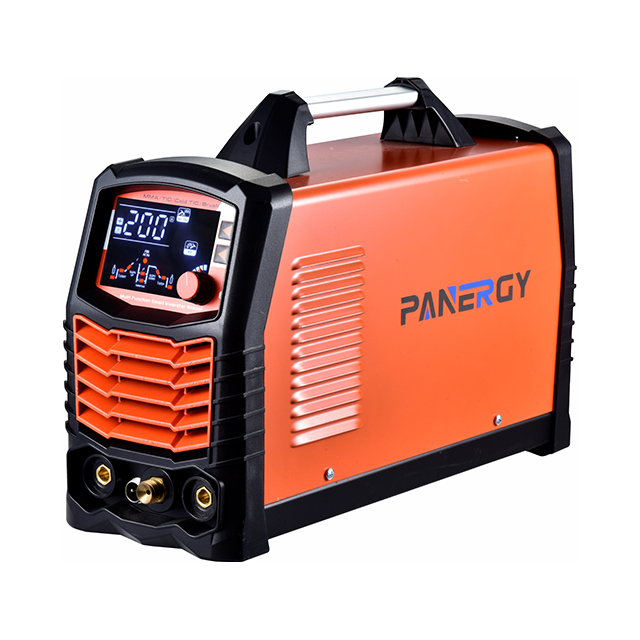
Additionally, you must evaluate the duty cycle, which indicates how long a machine can operate continuously within a ten-minute window before thermal shutdown. A reliable 200A inverter dual TIG welder boasting a 60 percent duty cycle at maximum output can weld continuously for six minutes before requiring a four-minute cooling period. For versatile, all-around fabrication, a 200A to 250A machine is considered the industry sweet spot.
Power delivery and waveform controls mean absolutely nothing if you contaminate the weld pool before you even establish a puddle. The method used to initiate the electrical arc is a strict pass or fail criterion when selecting equipment for non-ferrous metals.
Basic direct current machines often utilize scratch start mechanisms. These require the operator to physically touch the tungsten electrode to the workpiece to close the electrical circuit, then quickly lift it to establish the arc. While acceptable for rough carbon steel pipe welding, touching tungsten to aluminum instantly contaminates the electrode. The aluminum melts directly onto the tungsten tip, causing the arc to turn green, sputter violently, and spit tungsten inclusions into the weld puddle. This completely ruins the structural integrity of the joint.
A high-frequency start is completely non-negotiable for aluminum and highly recommended for sanitary stainless steel. This technology uses a high-voltage, low-amperage spark to ionize the argon shielding gas, allowing the welding current to jump the physical gap between the tungsten and the metal. This results in a completely contactless, surgically clean arc initiation every single time. The tungsten remains perfectly sharp, reducing downtime spent running to the bench grinder.
Recognizing technical specifications on paper is only half the battle. Avoiding practical hardware limitations is equally crucial. Many buyers overlook the physical accessories and secondary controls that drastically affect daily usability on the shop floor.
Evaluate Water-Cooling Readiness: Welding aluminum at high amperages generates massive amounts of heat, much of which travels backward into the torch. A standard air-cooled torch relies solely on the flow of argon gas and ambient air to stay cool. When welding at 150 amps or higher, an air-cooled torch becomes uncomfortably hot to hold within minutes. Buyers planning to weld thick aluminum should ensure the machine features dedicated plugs for a water cooler and is compatible with a water-cooled torch.
Demand a Linear Foot Pedal: Dynamic, real-time amperage adjustment is required as the base metal absorbs heat and the puddle widens. A cheap, mechanically jerky foot pedal with dead zones ruins the precision required for high-level fabrication. Ensure the machine comes with a high-quality linear potentiometer foot pedal that provides smooth, predictable power delivery from the lowest amp setting right up to maximum output.
Verify Post-Flow Gas Controls: When you release the foot pedal and extinguish the arc, the weld puddle and the tungsten electrode are still glowing hot. If exposed to atmospheric oxygen immediately, they will rapidly oxidize and degrade. Adjustable post-flow gas controls allow argon to continue flowing over the weld zone for several seconds after the arc stops. This is an absolute necessity for maintaining the integrity and color of stainless steel joints.
No. While you can technically weld aluminum with direct current using pure helium gas, it is highly impractical, difficult to control, and extremely expensive for standard applications. You absolutely need an alternating current machine to properly break down and clean the tough oxide layer off the aluminum surface before the base metal can melt.
For modern solid-state machines, two percent Lanthanated, color-coded blue, or two percent Ceriated, color-coded grey, tungsten is highly recommended. Unlike pure green tungsten which was used on older transformers and tends to ball up, Lanthanated and Ceriated hold a razor-sharp point well for stainless steel while easily handling the thermal loads of aluminum without degrading.
While pulse functionality is most famous for controlling heat and preventing distortion on stainless steel, it is also incredibly useful for aluminum fabrication. Pulsing on thin aluminum helps prevent edge burn-through, assists in out-of-position welding including vertical or overhead joints, and provides tighter control over the weld puddle freezing rate.
Tungsten diameter should match your amperage output. For precision work on thin stainless steel under 90 amps, a 1/16-inch tungsten provides a highly focused arc. For general fabrication on both aluminum and stainless between 90 and 200 amps, a 3/32-inch tungsten is the industry standard. If you are pushing past 200 amps on thick aluminum, step up to a 1/8-inch tungsten to prevent the tip from melting off.
Water cooling is not strictly necessary if you primarily weld thin stainless steel at low amperages. However, if you plan to utilize the full 200-amp capacity for aluminum fabrication, a water-cooled torch setup is highly recommended. Pushing 200 amps through a standard air-cooled torch will overheat the internal copper components within a few minutes, leading to operator discomfort and eventual equipment failure.
Investing in the right features upfront saves immense amounts of money on ruined materials and daily frustration. By prioritizing a dual-current system with solid-state technology, advanced pulse settings, adjustable waveform balance, and high-frequency start, you equip your shop with the capability to tackle any project that comes through the door. Stop struggling with inadequate equipment that limits your craftsmanship.
Ready to elevate your welding precision? Explore professional-grade equipment engineered for rigorous industrial demands. Discover the exact specifications, dual-voltage capabilities, and advanced digital controls you need by checking out the high-performance solutions available at Panergy Machinery today.
