


Views: 0 Author: Site Editor Publish Time: 2026-09-03 Origin: Site


A reliable compressed air supply is a fundamental operational requirement in professional environments. Picture a bustling auto repair facility. Mechanics are rapidly firing impact wrenches to swap out suspension components. Meanwhile, a technician in the paint booth relies on a flawless stream of air for a high-volume low-pressure spray gun. Equipment downtime here directly translates to lost revenue. Tools stall, finishes are compromised, and labor hours become painfully inefficient.
A frequent operational hurdle for facility managers is selecting the absolute correct specifications for their equipment. Shops often end up with a unit that is severely underpowered. This causes continuous motor strain and premature mechanical failure. Alternatively, they procure an excessively large machine, resulting in wasted capital and lost floor space. The optimal solution for heavy-duty applications is the belt-driven system. Recognized as the gold standard for durability, these machines handle rigorous daily demands with ease. This guide provides a definitive framework for matching tank size and air capacity to your specific site requirements.
Recent market data reveals a massive shift in how industrial managers approach compressed air. With urban noise regulations tightening and electricity costs climbing, the industry is rapidly moving away from high-speed direct-drive screamers. Today, the focus is squarely on high-efficiency, low-speed belt-driven systems. This transition prioritizes long-term equipment survival, workplace safety, and a significantly lower total cost of ownership.
CFM is the Primary Metric: Air capacity dictates actual tool performance. Your system must consistently produce a higher cubic feet per minute rating than the maximum requirement of your most demanding tool.
Tank Size Dictates Workflow: The receiver tank acts as an energy reservoir. Larger tanks support continuous-use applications by providing a steady air supply without forcing the electric motor into a constant run state.
Mechanical Superiority: Utilizing a pulley setup, these models operate at significantly lower rotational speeds compared to direct-drive alternatives. This mechanical advantage drastically reduces heat generation and extends operational lifespan.
Application-Specific Configurations: Stationary electric units are optimal for indoor workflows. Dynamic job sites typically require ruggedized, portable, or gas-powered setups.
To make an informed procurement decision, you must understand the mechanical design that differentiates commercial-grade air systems from consumer-level toys. A belt driven air compressor utilizes a robust pulley system. The electric motor or gas engine drives the cast-iron pump via a heavy-duty V-belt. This indirect transmission of power provides mechanical advantages that firmly establish it as the standard in professional environments.
In a direct-drive setup, the motor connects directly to the pump crankshaft. Consequently, the pump must spin at the exact same high speed as the motor, often exceeding 3,400 revolutions per minute. While these compact units suit weekend hobbyists, high-speed operation generates excessive heat and deafening noise. Under continuous industrial use, this inevitably leads to rapid component wear.
In contrast, a belt-driven system leverages varying pulley sizes to drastically reduce the pump rotational speed. High-quality units bring this down to a highly efficient 900 to 1,500 revolutions per minute. Lower speeds mean remarkably less friction and minimized wear on internal cylinders. Furthermore, maintenance is highly streamlined. If a severe jam occurs, the belt simply slips or breaks. This protects the expensive motor from catastrophic failure. Replacing a worn V-belt is a fast, inexpensive task.
Buyers are frequently overwhelmed by technical jargon when evaluating specifications. Understanding the relationship between pressure and volume is the absolute foundation of selecting the correct equipment. Focusing on the right metrics ensures your tools perform at their rated capacity without frustrating interruptions.
Pounds per square inch measures the specific force of the compressed air delivered to the tool. This dictates how much raw power the tool can exert in a single moment. For example, driving a heavy framing nail into dense oak requires immediate force. Most standard pneumatic tool compressor setups require an operating pressure between 90 and 120 pounds per square inch to function optimally. While high pressure is necessary for initial force, it is rarely the limiting factor in professional workflows.
If pressure is the force of the air, cubic feet per minute, or CFM, is the actual endurance. This volume sustains the force over time. CFM is universally considered the most important metric in equipment sizing. Should your machine fail to produce enough volume, your tools will rapidly drain the air tank. Grinders will stall under load. Paint sprayers will sputter and ruin clear coats. Impact wrenches will fail to break loose stubborn bolts.
To guarantee uninterrupted workflow, industry professionals rely on a strict 1.5 multiplier rule. First, identify the tool in your inventory that requires the highest volume at 90 pounds per square inch. Next, multiply that requirement by 1.5 for continuous use. If a dual-action sander requires 14 CFM to run continuously, multiplying 14 by 1.5 gives you 21. Therefore, you should procure a unit rated for at least 21 CFM. This empirical formula ensures you have an adequate buffer for peak demand and prevents thermal motor overload.
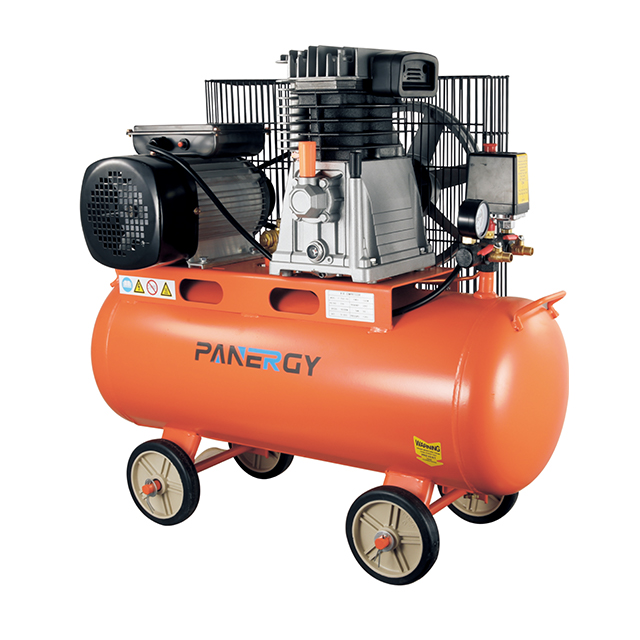
A pervasive misconception in the industry is that a larger tank automatically equates to a more powerful machine. In reality, the tank does not produce air at all. It merely stores it. Acting as a pneumatic battery, the receiver tank holds reserve air so the pump does not have to engage every single time a technician pulls a trigger.
Systems equipped with smaller tanks, ranging from 10 to 30 gallons, are engineered specifically for intermittent tool usage. Tools like brad nailers and tire inflators require short, rapid bursts of air rather than a continuous flow. Because the volume of air consumed per trigger pull is minimal, a smaller tank provides plenty of reserve. These dimensions are highly favored in portable models where job site mobility is a critical logistical requirement.
Conversely, tools that demand an unbroken stream of air mandate a massive storage reservoir. Sandblasters and die grinders will completely deplete a small tank in mere seconds. A 60 to 120-gallon tank allows the operator to sand a vehicle panel without waiting for the system to rebuild pressure. In stationary environments where mobility is irrelevant, investing in the largest tank your floor space allows is a remarkably sound operational strategy.
The intricate relationship between tank size and motor lifespan is defined by the duty cycle. This is the percentage of time a machine can safely run without overheating. A sufficiently large tank significantly extends the time between motor cycles. A larger reserve means the motor turns on less frequently, runs for a longer, more efficient cycle to refill the tank, and then rests. This prevents the rapid short-cycling that causes premature electrical failure.
Stationary indoor workshops have highly distinct demands. Space is usually dedicated, the power supply is stable, and the tools draw massive amounts of air. Sizing a workshop air compressor requires a meticulous analysis of the daily tasks performed in the facility.
Automotive repair facilities represent some of the most demanding environments for compressed air. Mechanics rely heavily on high-torque impact wrenches. More importantly, collision repair centers require a flawless, continuous supply of air. Even a momentary drop in pressure or a sudden surge of moisture can cause paint splattering. This results in thousands of dollars in rework.
For a standard two-bay auto repair shop, a 60 to 80-gallon stationary unit featuring a cast-iron pump is the absolute baseline. The system should deliver a minimum of 14 to 20 CFM at 90 pounds per square inch. If the shop operates a dedicated paint booth alongside active mechanics, upgrading to a two-stage pump delivering upwards of 30 CFM is highly recommended.
While woodshops utilize intermittent tools like pin nailers, their primary air consumption stems from continuous-use random orbital sanders. Sanders are notorious air hogs, frequently requiring 10 to 15 CFM just to maintain their rotational speed under friction load. Furthermore, woodworking requires exceptionally dry air. When an undersized pump runs constantly, it generates excessive heat. Hot air holds more moisture, which condenses into water once it enters the cooler air lines. Water in the lines will instantly ruin expensive wood stains. Woodshops must prioritize high-capacity models with large tanks, allowing the air ample time to cool and drop its moisture.
Construction sites present a completely different set of logistical challenges. Equipment must be incredibly robust to survive harsh weather, abrasive dust, and rough handling. Yet, it must remain portable enough to be loaded into the back of a pickup truck.
In framing and roofing applications, the primary pneumatic tools are nail guns. While a single framing nailer uses very little air per shot, a busy job site often has multiple carpenters working simultaneously from a single air manifold. Therefore, the construction compressor must possess a fast recovery rate to keep up with rapid-fire nailing. Otherwise, nails will be left protruding from the wood, severely slowing down production.
The choice of power plant is entirely dictated by the job site infrastructure. If temporary power is available, electric belt-driven units are preferred due to lower maintenance needs and zero exhaust emissions. Twin-stack or wheelbarrow designs offer the perfect balance of capacity and mobility. However, for remote framing sites or early-phase roadwork where electricity is non-existent, a gas-powered unit is mandatory. These ruggedized units utilize a gas engine to turn the pump, offering massive output and total grid independence.
Purchasing heavy equipment based on guesswork inevitably leads to operational bottlenecks. Use this objective, step-by-step audit to calculate your exact pneumatic requirements before requesting quotes for an industrial compressor.
Begin by compiling a comprehensive inventory of every pneumatic tool currently in your facility. Check the manufacturer specifications stamped directly on the tool. Record the required volume at 90 pounds per square inch for each item.
Tool Type | Typical Air Consumption | Usage Pattern |
|---|---|---|
Framing Nailer | 2 to 3 CFM | Intermittent |
Half-Inch Impact Wrench | 5 to 8 CFM | Intermittent |
Die Grinder | 8 to 10 CFM | Continuous |
Dual Action Sander | 11 to 15 CFM | Continuous |
Paint Spray Gun | 14 to 18 CFM | Continuous |
Next, determine the maximum number of tools that will be operated at the exact same time. If you run a shop with multiple technicians, you must aggregate the demand. If one technician is using a die grinder requiring 10 CFM and another is simultaneously using an impact wrench requiring 8 CFM, your baseline requirement is 18 CFM.
Finally, factor in future business growth. Buying a machine that exactly meets your current needs leaves zero room for expansion. Multiply your total calculated requirement by a safety factor of 1.30. If your calculated simultaneous need is 18 CFM, scaling up by 30 percent brings your target to roughly 24 CFM. Purchasing a unit that delivers this volume ensures you will not need to prematurely replace your equipment.
A heavy-duty air system is a significant financial investment. While belt-driven models are engineered for extreme durability, their longevity is entirely dependent on strict adherence to a preventative maintenance schedule. Neglecting basic mechanical needs will rapidly lead to preventable downtime.
The V-belt serves as the critical power transmission link between the motor and the pump. Over time, rubber belts naturally stretch. If the belt becomes too loose, it will slip on the pulleys. This causes a high-pitched squealing noise and a severe drop in production efficiency. Conversely, if it is too tight, it places excessive lateral load on the motor bearings. Inspect the belt monthly. Apply moderate pressure to the center of the belt between the two pulleys. There should be approximately half an inch of deflection.
Just like an automobile engine, the cast-iron pump relies on specialized oil to lubricate the crankshaft and cylinder walls. Running the pump with degraded oil will deeply score the cylinders and cause catastrophic seizure. Always use high-quality, non-detergent compressor oil. Perform complete oil changes every 500 operating hours. Daily checks of the oil sight glass are mandatory.
The physics of compressing ambient air naturally generates heat and squeezes moisture out of the atmosphere. This moisture rapidly condenses inside the cooler steel air tank. If left unattended, this pooling water causes severe internal oxidation. Over time, rust weakens the structural integrity of the pressurized vessel. Every tank is equipped with a drain valve at its lowest point. This valve must be opened at the end of every single workday while the tank still holds a small amount of pressure to forcefully blow the accumulated water out.
Matching tank size and air capacity is a critical step in outfitting any professional workspace. By thoroughly understanding your specific tool requirements and workflow patterns, you can select a system that supports continuous productivity. Evaluate your specific workshop or construction site needs today. For facilities demanding uncompromising reliability, visit Panergy Machinery to explore a full lineup of industrial-grade, correctly sized equipment guaranteed to deliver lasting professional performance.
While these models are built for heavy industrial use and possess significantly higher duty cycles compared to direct-drive models, they still require proper thermal management. A properly sized tank ensures the motor and pump get adequate downtime between pressurized cycles, preventing thermal overload and extending the life of the machine.
Automotive painting utilizes high-volume spray guns, which demand a massive, continuous volume of air. To ensure a smooth, uninterrupted clear coat without pressure drops or moisture sputtering, you typically require a unit with at least a 60 to 80-gallon tank and a minimum delivery of 14 to 18 CFM at 90 pounds per square inch.
Yes, it is significantly quieter. Because the pulley system allows the cast-iron pump to spin at a much lower speed than the electric motor, the unit generates far less mechanical noise and vibration. This makes it the vastly preferred choice for enclosed indoor environments.
Empirical signs of improper belt tension include high-pitched squealing noises upon motor startup, the machine taking noticeably longer to build maximum tank pressure, a faint smell of burning rubber, or visible slack exceeding half an inch when moderate pressure is applied to the center of the belt.
For standard industrial operations, you should perform a complete oil change every 500 operating hours or every three months, whichever comes first. During the initial break-in period of a brand-new pump, the first oil change should occur after just 50 hours to remove any microscopic metal shavings from the manufacturing process.
If the receiver tank is undersized for your pneumatic demand, the air volume will deplete faster than the pump can replenish it. This causes a rapid drop in line pressure, leading to stalled tools and ruined finishes. Furthermore, it forces the electric motor to run constantly without a cooling break, which will quickly lead to thermal overload and premature motor failure.
