


Views: 0 Author: Site Editor Publish Time: 2026-09-14 Origin: Site


Improper charging infrastructure carries massive hidden costs for any operation. Mismatched charging profiles accelerate battery degradation rapidly. They cause irreversible thermal damage to internal cell structures. You ultimately face premature asset replacement and unexpected downtime. Balancing operational uptime with long-term battery health is a daily challenge. Selecting equipment requires more than matching basic voltage numbers. You must align charge rates with specific operational workflows. You must consider daily duty cycles and facility power constraints. This technical evaluation framework helps fleet managers and facility engineers assess specifications accurately. We provide actionable insights to compare different charging technologies effectively. You will learn to select the optimal equipment for your specific use cases. This applies directly to personal automotive maintenance and heavy-duty industrial applications alike.
Chemistry and Voltage Dictate the Baseline: A battery charger must precisely match the battery’s chemistry (e.g., Flooded Lead-Acid, AGM, Lithium-ion) and voltage to prevent undercharging sulfation or overcharging thermal runaway.
Sizing Requires Amp-Hour (Ah) Math: Selecting the correct amperage output depends on the battery’s total Ah capacity, the vehicle's Ah-per-hour usage rate, and the required turnaround time.
Intelligent Charging is Now the Standard: Utilizing a smart battery charger mitigates human error by automatically adjusting charge profiles based on real-time battery diagnostics, temperature, and state of charge (SOC).
Application Context Drives ROI: Industrial material handling (requiring opportunity or fast charging) demands vastly different thermal management, infrastructure, and vendor support compared to automotive fleet maintenance or seasonal storage.
Defining a successful implementation requires clear operational metrics. You want to maximize total battery cycles over the asset's lifespan. You must eliminate mid-shift power failures entirely. Optimizing facility energy consumption is another performance goal. Achieving these targets requires precise equipment alignment. You cannot achieve operational efficiency with mismatched hardware. When a forklift dies halfway through a shift, productivity stops. Operators waste time swapping batteries instead of moving product. This downtime directly impacts your bottom line.
The physical consequences of incorrect charging are severe and immediate. Lead-acid batteries suffer from rapid grid corrosion when overcharged. Excessive current causes electrolyte boil-off in flooded cells. This exposes internal lead plates to oxygen. Exposed plates sulfate quickly and lose capacity permanently. Soft lead sulfate crystals harden into an impenetrable barrier. Once this barrier forms, the battery cannot accept a full charge. You will notice runtimes dropping from eight hours to four hours. Eventually, the battery fails completely.
Lithium-ion cells face different but equally destructive risks. Applying incorrect voltage thresholds causes lithium plating. Metallic lithium builds up on the anode surface during high-current charging at low temperatures. This severely degrades capacity and creates internal short-circuit risks. A short circuit inside a lithium cell often leads to thermal runaway. This is a catastrophic failure mode that can result in severe fires.
You must evaluate equipment through a strict operational lens. Match the hardware to the battery and the daily duty cycle. Consider how many shifts your facility runs daily. Evaluate the exact duration of available charging windows. Calculate the precise Ah-per-hour consumption of your vehicles. A perfect voltage match means nothing if the charge rate cannot keep up with operational demand. You must view the battery and the charging hardware as a single, integrated power system.
Battery Chemistry | Common Failure Mode from Improper Charging | Physical Consequence |
|---|---|---|
Flooded Lead-Acid | Electrolyte Boil-Off / Sulfation | Exposed plates harden, permanently reducing Ah capacity. |
Absorbed Glass Mat (AGM) | Thermal Dry-Out | Glass mats lose moisture, increasing internal resistance and killing the battery. |
Lithium-ion | Lithium Plating / Overvoltage | Internal short circuits leading to thermal runaway and potential fire hazards. |
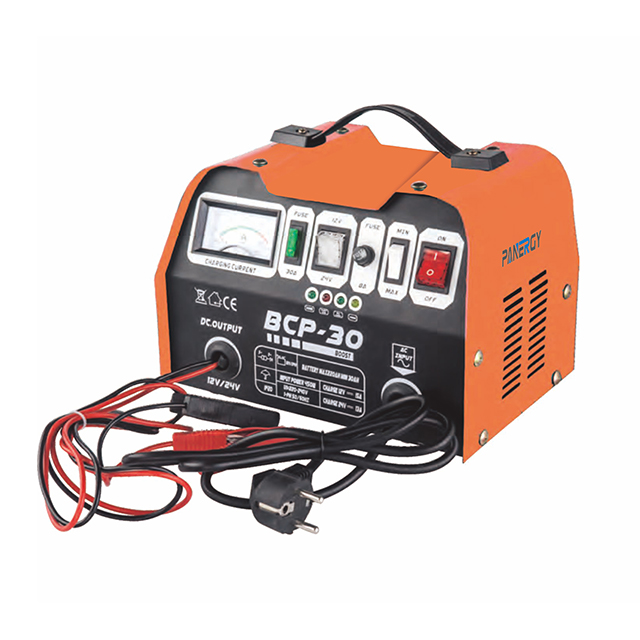
Voltage parity is a strict, non-negotiable requirement. A 24V system requires a dedicated 24V charging unit. A 48V forklift requires a 48V output. Connecting mismatched voltages causes immediate catastrophic failure. You risk destroying the battery and the charging hardware instantly. Always verify the nominal voltage on the battery data plate before connecting any equipment. Never assume the voltage based on the physical size of the battery casing.
Different battery chemistries require distinct charging algorithms. Flooded lead-acid batteries need a specific three-stage approach. They require bulk, absorption, and float phases. They also need occasional high-voltage equalization to prevent acid stratification. Acid stratification occurs when heavy acid sinks to the bottom of the cell. The equalization phase intentionally overcharges the battery slightly to mix the electrolyte. Absorbed Glass Mat (AGM) batteries require lower absorption voltages. They cannot tolerate the high heat of standard equalization. Applying a flooded profile to an AGM battery will dry out the glass mats permanently.
Lithium-ion batteries utilize a strict Constant Current/Constant Voltage (CC/CV) profile. They do not require a float stage. Applying a continuous float charge to lithium-ion degrades the cells rapidly. Using a standard lead-acid profile on a lithium battery is highly dangerous. It can trigger thermal runaway and severe fires. Always verify that your equipment supports your specific battery chemistry through selectable profiles or dedicated hardware.
Selecting the correct amperage output requires basic math. You must base this on the battery’s total Ah capacity. The industry standard relies on the 10-20% rule for conventional applications. A 100Ah battery generally requires a 10A to 20A output. This ensures a safe, efficient charge without excessive heat generation. Pushing beyond 20% in conventional lead-acid batteries causes dangerous overheating. Heat is the primary enemy of battery longevity.
Depth of Discharge (DoD) directly impacts total charging time. A battery discharged to 80% DoD takes significantly longer to reach 100% State of Charge (SOC) than one at 50% DoD. You must calculate the required replenishment rate based on your available downtime. The bulk phase returns the first 80% of capacity quickly. The absorption phase takes much longer to return the final 20%. You cannot rush the absorption phase without damaging the battery.
Consider a 500Ah forklift battery depleted to 20% SOC. You need to replace 400Ah of energy. A 50A unit will take roughly 8 to 10 hours to complete this task. This factors in the slower absorption phase. If your shift schedule only allows for 6 hours of downtime, a 50A unit will fail your operational needs. You would need to explore higher output options or change your shift schedule.
Upsizing your equipment offers excellent future-proofing capabilities. Selecting a unit with a higher amp rating accommodates future fleet upgrades. It handles tighter turnaround times effectively. However, you must ensure your facility electrical infrastructure can handle the increased AC draw. Do not overload your facility grid to achieve faster charge times. Consult with an electrician before installing high-output units. Upgrading facility power lines is often more expensive than the charging hardware itself.
Battery Capacity (Ah) | Recommended Charger Output (10-20% Rule) | Estimated Charge Time (80% DoD) |
|---|---|---|
50Ah | 5A to 10A | 6 to 10 Hours |
100Ah | 10A to 20A | 6 to 10 Hours |
500Ah (Industrial) | 50A to 100A | 8 to 12 Hours |
1000Ah (Heavy Motive) | 100A to 200A | 8 to 12 Hours |
Conventional charging is ideal for single-shift operations. These facilities typically have 8 to 12 hours of uninterrupted downtime. The equipment delivers a slow, steady current over a long period. This minimizes heat generation and maximizes battery lifespan. It is the most gentle and traditional method for lead-acid chemistries. It requires operators to swap batteries if the vehicle is needed for a second shift. Battery swapping requires dedicated battery rooms, gantry cranes, and trained personnel.
Opportunity charging is designed for intensive multi-shift operations. Operators plug in their vehicles during short breaks and lunches. The goal is to optimize the SOC range throughout the day. Keeping batteries between 30% and 70% during shifts maximizes uptime. This strategy prevents deep discharges and minimizes heat generation. It eliminates the need for mid-shift battery swapping. It requires disciplined operators who plug in at every available opportunity. If operators forget to plug in during breaks, the vehicle will die before the shift ends.
Fast and ultra-fast charging applications utilize ultra-high current. They return massive amounts of energy in minutes rather than hours. However, you must accept specific operational trade-offs. Fast charging accelerates battery wear due to extreme heat generation. Strict thermal monitoring is absolutely mandatory. Facility infrastructure upgrades are often required to handle the massive peak power demands. You must weigh the productivity gains against the accelerated battery degradation. Fast charging often requires specialized batteries designed to handle high thermal loads.
Microprocessor-controlled multi-stage charging defines modern intelligent equipment. These systems execute precise bulk, absorption, float, and equalization stages automatically. Integrating a Smart Battery Charger eliminates human error from the daily maintenance equation. The microprocessor reads the battery voltage and adjusts the current dynamically. It ensures optimal energy transfer without operator intervention. You no longer have to rely on operators turning dials or setting timers.
These intelligent units actively prevent dangerous overcharging scenarios. They automatically compensate for ambient temperature fluctuations. A cold battery requires a slightly higher voltage to reach full capacity. A hot battery requires lower voltage to prevent thermal damage. Smart systems adjust these parameters in real-time. You can also program them to schedule regular equalization charges automatically. This prevents acid stratification without relying on manual calendars. The system handles the complex chemistry requirements behind the scenes.
Data logging capabilities provide immense value for fleet managers. You can track overall battery health and total Ah throughput over time. Managers can verify charging compliance across all vehicle operators. You can see exactly when a battery was plugged in and unplugged. This data helps identify failing cells before they cause operational downtime. It shifts maintenance from reactive to proactive. You can replace a weak battery before it strands a forklift in the middle of an aisle.
Active charging differs significantly from basic trickle charging. Trickle units supply a constant, low-amperage current indefinitely. They do not monitor the battery's actual state of charge. Leaving a basic trickle unit connected can eventually overcharge and destroy a battery. The constant current slowly boils off the electrolyte over weeks or months. Trickle chargers are outdated technology that should be avoided for long-term storage.
Smart maintenance charging solves this problem entirely. These units monitor the battery voltage continuously. They stop supplying current completely when the battery reaches 100% SOC. They only resume charging when the voltage drops below a specific, pre-programmed threshold. This creates a safe, automated maintenance cycle. The battery remains fully charged without any risk of overcharging damage.
These maintainers are perfect for automotive storage and backup generators. Seasonal equipment benefits greatly from smart maintenance during the off-season. Parasitic draw from onboard computers is the primary concern in these applications. A smart maintainer offsets this parasitic draw perfectly. It keeps the battery ready for immediate use. When you pull a seasonal vehicle out of storage, it starts immediately.
Motive power applications require exceptionally high capacity. Deep cycling is the standard daily expectation in warehouses. Forklift batteries power heavy lifting and continuous movement across large facilities. They endure brutal operational environments and extreme temperature variations. The charging infrastructure must be equally robust to support these demands. A standard automotive unit will burn out quickly if used on a forklift battery.
You must calculate Ah-per-hour usage accurately for material handling. Determine exactly how much energy a lift truck consumes per hour of operation. This calculation determines if conventional charging is sufficient. It reveals if opportunity charging is mandatory to finish a heavy shift.
Identify the total Ah capacity of the forklift battery.
Record the State of Charge (SOC) at the beginning of the shift.
Record the SOC at the end of the shift.
Calculate the total Ah consumed during the shift.
Divide the total Ah consumed by the number of hours worked to find the Ah-per-hour rate.
Evaluate your facility infrastructure requirements carefully. Dedicated battery rooms require significant floor space. They need specialized ventilation systems for hydrogen off-gassing. They often require overhead gantry cranes for physical battery swapping. Decentralized point-of-use charging stations offer greater flexibility. Operators can charge vehicles directly in their assigned work zones. This reclaims valuable warehouse space and reduces unnecessary travel time. Point-of-use stations are highly effective when paired with opportunity charging strategies.
Automotive applications present entirely different operational challenges. Starting, lighting, and ignition (SLI) batteries are designed for shallow discharges. They deliver massive bursts of current to start engines quickly. They do not tolerate deep cycling well. Discharging an SLI battery below 80% repeatedly will destroy its internal plates. Dual-purpose commercial batteries offer a functional compromise. They provide starting power and moderate deep-cycle capabilities for auxiliary equipment.
Automotive shop environments demand specific equipment features. Portability is highly valued by technicians. Mechanics must move equipment between service bays easily. Ruggedness is essential to survive drops, impacts, and chemical spills. Jump-start capabilities add significant operational value in a busy shop. Utilizing a reliable Battery Charger ensures vehicles leave the facility fully powered. It prevents frustrating customer comebacks related to dead batteries after service. Shop units must handle 12V and 24V systems seamlessly to service both passenger cars and commercial trucks.
Energy efficiency varies wildly between different charging technologies. Legacy silicon-controlled rectifier (SCR) or ferroresonant chargers are notoriously inefficient. They often convert only 70% of AC power into usable DC power. The remaining 30% is wasted as heat. High-frequency chargers operate at up to 95% efficiency. Upgrading to high-frequency units reduces your monthly facility power bill significantly. The energy savings alone often pay for the equipment upgrade within a few years.
Evaluate the upfront cost savings of aftermarket industrial chargers against potential integration challenges. OEM equipment guarantees seamless communication with the vehicle's battery management system (BMS). Third-party units might require custom wiring or manual programming. You must weigh the initial purchase savings against the value of OEM technical support and warranty protection. A cheaper unit that damages a $5,000 forklift battery is a poor investment.
Infrastructure costs represent a massive hidden variable. Fast charging requires immense peak power. You might need to upgrade your facility's electrical panels to handle the increased AC draw. Running new 480V three-phase lines across a warehouse is incredibly expensive. You must also account for peak demand utility charges. Power companies charge premium rates if your facility draws massive amounts of electricity during peak hours. Smart systems can delay charging until off-peak hours to avoid these utility penalties.
Frame the premium cost of advanced chargers against the deferred capital expenditure of replacing degraded battery banks. A high-quality smart system extends the usable life of a lead-acid battery by years. It prevents sulfation, manages thermal loads, and ensures proper equalization. Spending more on the charging infrastructure reduces your long-term battery replacement budget. It is a direct investment in asset longevity.
Thermal runaway is a severe danger during high-amp charging cycles. Excessive current generates massive internal heat within the cells. If the battery cannot dissipate this heat, the internal temperature spirals out of control. This destroys the battery structure and creates severe workplace fire hazards. Lead-acid batteries can melt their casings. Lithium-ion batteries can vent toxic gases and ignite violently.
Mitigate this risk by mandating strict temperature controls. Always use equipment featuring a Battery Temperature Sensor (BTS). The BTS monitors the physical temperature of the battery casing continuously. If the temperature exceeds safe limits, the system throttles the amperage automatically. It will halt the charging process entirely if necessary to prevent thermal runaway. Never bypass a BTS sensor. It is your primary defense against catastrophic thermal failure.
Regulatory compliance is critical for facility safety and insurance purposes. Look for recognized safety certifications on all equipment. UL and CE marks indicate rigorous independent safety testing. OSHA compliance is mandatory for industrial battery rooms. Failing to meet OSHA standards results in severe fines and facility shutdowns. Insurance companies will deny claims if a fire starts from non-compliant equipment.
Proper ventilation is a strict, non-negotiable safety requirement. Flooded lead-acid batteries off-gas hydrogen during the final charging cycle. Hydrogen gas is highly explosive when it accumulates in confined spaces. You must install adequate exhaust fans and active hydrogen detection sensors. Never install charging stations in unventilated areas or sealed cabinets. Ensure airflow meets local fire code regulations. Keep open flames and sparks far away from charging zones.
Purchasing rigid charging infrastructure creates long-term operational risks. Your fleet requirements will inevitably change over time. You might upgrade to higher voltage vehicles to increase lifting capacity. You might transition from traditional lead-acid to advanced lithium-ion technology. Rigid infrastructure forces you to replace everything during a fleet upgrade. This results in massive wasted capital.
Mitigate this risk by selecting modular, adaptable equipment from the start. Modular systems allow you to add power modules as your energy needs grow. You can increase the amperage output simply by sliding a new module into the chassis. Advanced units feature user-selectable chemistry profiles. This allows you to use the exact same hardware when you transition to lithium-ion fleets. Future-proofing your infrastructure prevents costly, full-scale equipment replacements down the road.
The best equipment choice is entirely dependent on your specific operational context. You must evaluate the intersection of battery chemistry, total Ah capacity, and daily Ah-per-hour usage. Available charging windows dictate the required charging speed and technology. There is no universal solution for every application. You must align the hardware with your physical workflow.
Follow a strict shortlisting logic to ensure implementation success. First, identify your exact chemistry and voltage requirements. Second, calculate your Ah size and required turnaround time. Third, determine your operational duty cycle and application environment. Finally, select the appropriate technology, prioritizing high-frequency smart systems over legacy conventional units.
Take immediate action to optimize your charging infrastructure:
Conduct a comprehensive facility power audit to determine your maximum available AC draw.
Review your current battery asset inventory to identify mismatched or aging equipment.
Calculate the exact Ah-per-hour consumption for your most heavily utilized vehicles.
Contact a technical sales engineer for a custom infrastructure assessment and deployment plan.
A: No. Automotive units are designed for shallow-cycle SLI charging profiles. Industrial deep-cycle batteries require sustained high amperage to replenish massive Ah capacities. Automotive units typically lack the necessary sustained output. They also lack the crucial equalization phases required to prevent acid stratification in industrial lead-acid batteries.
A: The industry standard dictates the 10-20% rule for conventional charging. A 100Ah battery requires a 10A to 20A unit. This provides a safe, complete charge in 8 to 10 hours. If you have a deeper depth of discharge or require faster turnarounds, you may need to upsize within safe limits.
A: Trickle chargers supply a constant, low-amperage current indefinitely. They do not monitor battery voltage and can eventually cause overcharging damage. A smart unit actively monitors the battery's state of charge. It automatically switches to a safe float or maintenance mode once the battery is fully replenished.
A: Yes, but only if it is a modern, multi-chemistry unit with user-selectable profiles. Using a standard lead-acid profile on a lithium-ion battery is extremely dangerous. Lithium-ion requires a strict constant-current/constant-voltage algorithm and cannot tolerate the high-voltage equalization or float stages used for lead-acid.
A: Opportunity charging increases operational uptime by keeping the state of charge between 30% and 70%. However, it can increase internal battery heat and reduce overall cycle life if implemented poorly. It must be paired with the correct battery type, active thermal management systems, and scheduled weekly equalization charges.
