


Views: 0 Author: Site Editor Publish Time: 2026-09-10 Origin: Site


Did you know a single microscopic drop of oil can completely ruin an entire production run? Standard lubricated compressors are common across general manufacturing. They carry a constant, underlying risk of contamination. Even the most expensive inline filters will eventually degrade. When they fail, vapors bypass the system directly into your product. An oil-free system fundamentally solves this problem at the source.
In this comprehensive guide, we will explore exactly how these specialized machines work. Furthermore, we will break down their critical role in sensitive sectors where product safety and human health are on the line.
100% Air Purity ISO 8573-1 Class 0: Oil-free systems guarantee zero oil contamination. This directly protects end-products and patient well-being.
Strict Industry Compliance: These units are essential for meeting rigorous safety regulations in the food, beverage, medical, and electronics sectors.
Lower Total Cost of Ownership: By eliminating the need for expensive fluid changes, downstream filter replacements, and hazardous waste disposal, long-term costs drop significantly.
Eco-Friendly Operation: Removing hydrocarbons from the compression process drastically reduces a facility's carbon footprint.
Operational Versatility: Available in various form factors, ranging from massive industrial installations to compact portable units for localized clean air demands.
When manufacturing highly sensitive products or providing critical healthcare services, the quality of your compressed air is just as important as the raw materials entering your facility. Understanding the mechanical foundations of these systems is the crucial first step in facility risk mitigation.
Traditional air compressors rely heavily on synthetic oil. This fluid lubricates moving parts, seals the microscopic gaps between rotors, and dissipates the intense heat generated during compression. While this method is highly effective for a standard auto shop or metalworking plant, it inevitably introduces aerosols and vapors into the air stream.
Conversely, an oil-free system operates on a fundamentally different engineering principle. Manufacturers deploy advanced alternative technologies to completely avoid metal-to-metal contact without utilizing fluid lubrication in the compression chamber. Common designs include dry rotary screw systems that utilize precision-engineered, non-contacting rotors coated with specialized polymers like Teflon. Another popular variant is the scroll compressor. This design features one stationary and one orbiting scroll to trap and compress air without any friction. Finally, water-injected systems use pure water instead of oil for cooling and sealing. This ensures the resulting air is entirely free of hydrocarbons.
In industrial terminology, a true clean air compressor is not merely a standard machine with a robust filter slapped onto the exhaust valve. Rather, it is a system engineered from the ground up to produce uncontaminated air. The global benchmark for this absolute purity is established by the International Organization for Standardization.
The undisputed gold standard for sensitive applications is ISO 8573-1 Class 0 certification. It is crucial to note that Class 1 still allows for a minute concentration of oil up to 0.01 mg/m³. Class 0, however, dictates that the air must contain zero added oil—whether in liquid, aerosol, or vapor form.
ISO 8573-1 Class | Maximum Total Oil Content | Typical Application Suitability |
|---|---|---|
Class 0 | 0.00 mg/m³ Zero added oil | Pharmaceuticals, Food & Beverage, Microelectronics |
Class 1 | ≤ 0.01 mg/m³ | General packaging, high-grade automotive painting |
Class 2 | ≤ 0.1 mg/m³ | Standard manufacturing, pneumatic tools |
Class 3 | ≤ 1.0 mg/m³ | Heavy industrial equipment, sandblasting |
Facility managers frequently face intense budget pressures. This can sometimes lead to compromises during equipment procurement. However, underestimating the pervasive risks of contamination can result in catastrophic financial and reputational damage.
A prevalent and dangerous misconception is that an oil-injected compressor can achieve technically oil-free air when paired with a heavy series of coalescing and active carbon filters. From a strict risk management perspective, this is a massive gamble.
Filters are consumable mitigation devices highly dependent on ambient conditions. Imagine a summer heatwave hitting your facility. The temperature in the compressor room spikes. Suddenly, oil vapors easily bypass your standard coalescing filters. Furthermore, a microscopic tear in the filter medium can instantly send a concentrated burst of fluid downstream. Relying on a consumable filter to prevent contamination introduces a critical single point of failure into your production line.
When hydrocarbons bypass the filtration system, the fallout is immediate. Picture a microscopic mist coating a batch of silicon wafers. This results in hundreds of thousands of dollars in scrapped material before the pressure drop is even noticed on the control panel. For companies operating under FDA, USDA, or ISO quality management systems, a single contamination event can trigger revoked certifications, mandatory product recalls, and irreversible damage to consumer trust.
The food and beverage sector operates under some of the most stringent hygiene regulations globally. Because compressed air is often referred to as the fourth utility in these plants, its absolute purity is paramount to daily operations.
In modern food processing, compressed air frequently comes into direct or indirect contact with the consumable product. Typical applications include blowing crumbs off baked goods on a conveyor, aerating liquids in brewery vats, cleaning packaging materials before filling, and operating automated sorting robotics. If the air driving these processes contains even trace amounts of compressor lubricant, it will inevitably transfer directly to the food.
To maintain strict compliance with the FDA and the Global Food Safety Initiative, facilities must deploy a dedicated food grade compressor. A microscopic amount of vapor can drastically alter the taste, odor, and visual appeal of a beverage batch. More importantly, industrial lubricants contain hydrocarbons that are toxic if ingested. Utilizing an ISO Class 0 certified system removes the contamination variable entirely. This ensures the facility remains audit-ready at all times.
Transitioning from the factory floor to healthcare environments, compressed air ceases to be just a utility. It becomes a critical, life-sustaining component of patient care. The margin for error here is literally non-existent.
Hospitals rely heavily on medical air systems to operate ventilators, deliver precise anesthesia, and power delicate surgical instruments. According to standards set by the National Fire Protection Association and various global health authorities, medical air must be absolutely devoid of oil. Vapors introduced into a patient's respiratory system can trigger severe pulmonary complications. This makes true clean air systems a mandatory requirement.
Dental practices face similar, highly specific challenges. A specialized dental air compressor is required to power handpieces, 3-way syringes, and precision milling machines. If aerosols enter the dental air stream, they can coat the surface of a patient's tooth. This invisible film prevents composite resins and bonding agents from adhering properly. Ultimately, this leads to failed restorations. Additionally, warm fluid provides a breeding ground for bacteria within the air lines, posing a direct infection risk.
Unlike sprawling manufacturing plants where noise is expected, medical clinics and dental offices are confined spaces. Patient comfort is a top priority. High decibel levels can induce anxiety in patients and disrupt vital communication among medical staff. Modern engineering has addressed this by developing the quiet air compressor. These specialized units are housed in acoustic enclosures and utilize vibration isolators. Many models feature pure copper motors and advanced mufflers, allowing them to operate at whisper-quiet levels—often around 58 to 60 decibels. This makes them perfectly suited for clinical environments.
The electronics industry operates on a microscopic scale. Even the smallest environmental anomaly can render a highly expensive component completely useless.
Modern microchips, printed circuit boards, and semiconductors are manufactured in tightly controlled, ISO-certified cleanrooms. The air used in these environments must meet exact purity standards. As component architectures continue to shrink to the nanometer scale, the definition of a contaminant becomes increasingly strict.
Current industry analysis highlights a massive shift in facility design. As global semiconductor demand surges, fabs are migrating exclusively to Class 0 air. The risk of hydrocarbon deposition on sub-nanometer wafers has rendered traditional filtration obsolete. This trend is rapidly spilling over into battery manufacturing and pharmaceutical packaging, where regulatory bodies are tightening allowable particulate limits. Absolute source purity has become the new baseline for operational compliance.
If vapor from a standard machine enters a cleanroom, it condenses on surfaces. On a printed circuit board, a microscopic droplet acts as an unwanted insulator. This prevents solder from adhering properly, leading to weak joints and eventual device failure. Because the cost of scrapped materials in electronics manufacturing is astronomically high, investing in source-pure air is a fundamental requirement for yield protection.
When upgrading a facility, decision-makers often weigh the pros and cons of different systems. While lubricated models are cheaper initially, a deeper lifecycle analysis reveals a very different financial reality.
From a capital expenditure standpoint, advanced clean systems carry a higher initial price tag. The advanced materials required to run without lubrication—such as Teflon-coated piston rings and stainless steel valves—drive up manufacturing costs. However, the Total Cost of Ownership over a 5 to 10-year period almost always favors the clean model.
Lubricated systems incur continuous operational costs. These include purchasing synthetic fluids, replacing primary and secondary separators, and maintaining downstream inline filters. Furthermore, as filters capture particulates, they create resistance. A pressure drop of just 14.5 PSI can increase energy consumption by approximately 7%. Because a clean system does not rely on heavy downstream filtration, it maintains a consistent pressure profile. This results in measurable energy savings.
For a general auto repair shop, a standard system is highly practical. In contrast, for food, medical, and electronics applications, it becomes a game of statistical probability. The question is not if a filter will degrade, but when. Risking a multi-million dollar pharmaceutical batch or a patient's safety to save a fraction of the cost on equipment is an unacceptable gamble.
Beyond the immediate requirements of product safety, adopting advanced pneumatic technology aligns seamlessly with broader corporate operational and sustainability goals.
With increasing regulatory pressure regarding Environmental, Social, and Governance standards, companies must manage their waste streams carefully. Standard machines generate toxic condensate—a mixture of water and hydrocarbons that must be separated and disposed of according to strict environmental laws. Upgrading your system completely eliminates the creation of this hazardous waste. The resulting condensate is simply pure water. This can usually be discharged safely into standard municipal drains.
Operational downtime is one of the most expensive hidden costs in any facility. Fewer moving parts in the filtration chain mean fewer opportunities for mechanical failure. Without the need to constantly monitor fluid levels, replace separator elements, or manage complex condensate drains, maintenance teams can focus on core production equipment. This directly increases overall facility uptime.
Selecting the correct machinery requires a systematic analysis of your facility's specific pneumatic demands. Over-sizing wastes energy, while under-sizing causes equipment stalling.
The two most critical metrics are Cubic Feet per Minute which measures air volume, and Pounds per Square Inch which measures pressure. You must identify the piece of equipment that requires the highest operating pressure. For example, many industrial tools require a steady 0.8Mpa 115 PSI to function correctly. Next, sum the volume requirements of all pneumatic tools that will operate simultaneously. It is industry standard to add a 20% safety margin to this total to accommodate future expansion.
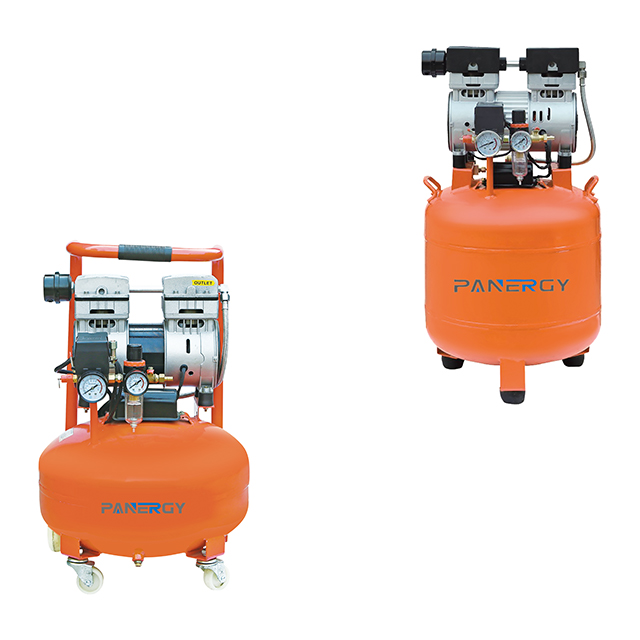
Not all clean air applications require massive, stationary rotary screw installations. For specialized electronics repair shops, mobile dental clinics, or small-scale craft breweries, a portable oil free compressor provides the perfect balance of purity and flexibility. These compact units—often featuring dual-cylinder designs and power ratings from 500W to 1500W—deliver ISO Class 0 air on demand. They can be easily relocated as operational layouts change, completely eliminating the need for expensive facility-wide piping.
The reliability of your pneumatic system is heavily dependent on the engineering standards of the manufacturer. When purity is a non-negotiable aspect of your business, it is vital to source equipment that is rigorously tested and certified. By partnering with established solution providers, facility managers can access machinery that guarantees compliance, backed by robust technical support.
Clean air is the invisible lifeblood of sensitive manufacturing and healthcare operations. While standard filters offer a false sense of security, they cannot guarantee complete removal of hazardous vapors over time. Upgrading your infrastructure eliminates dangerous contamination risks at the source. It actively protects patient health, safeguards delicate electronics, and ensures food safety. By assessing your facility's specific requirements and upgrading to true Class 0 technology, you invest not just in machinery, but in total operational peace of mind. Ready to eliminate contamination risks in your facility? Explore the full range of certified solutions at Panergy Machinery to find the exact model tailored for your critical application.
The operational lifespan depends heavily on the specific compression technology used and adherence to routine maintenance. Generally, industrial rotary screw models are engineered to operate for 40,000 to 60,000 hours before requiring a major airend overhaul. Because there is no fluid to lubricate the internal rotors, the specialized coatings will eventually wear down. However, with proper care—such as ensuring ambient intake air is clean—these machines provide decades of reliable service.
Historically, early generations were known to be louder because they lacked the sound-dampening properties of internal fluids. However, modern engineering has largely solved this issue. Today, manufacturers utilize advanced acoustic enclosures, vibration-isolation mounts, and specialized scroll technology to reduce noise emissions drastically. Many modern units operate at decibel levels as low as 58 dB, making them perfectly suited for indoor clinical settings.
No, this is a common industrial misconception. The ISO 8573-1 Class 0 standard specifically and exclusively refers to hydrocarbon contamination including liquid, aerosols, and vapors. It guarantees the machine introduces zero added fluid into the air stream. However, atmospheric intake air naturally contains water vapor, dust, and pollen. To achieve truly pure air, a Class 0 machine must still be paired with appropriate refrigerated or desiccant dryers and particulate filters.
Yes, a portable unit can absolutely be used for commercial food packaging, provided it meets two essential criteria. First, it must consistently deliver the required volume and pressure demanded by your specific packaging machinery. Second, it must meet the hygiene and safety standards mandated by your local food safety authority. Portable systems are particularly beneficial for small-batch artisan food producers who require guaranteed clean air without the infrastructure costs of a centralized system.
While you save time by not changing fluids and separators, routine maintenance is still critical. Intake filters should be inspected weekly and replaced every 2,000 hours or sooner in dusty environments. Teflon piston rings in reciprocating models generally need replacement every 4,000 to 8,000 hours, depending on the duty cycle and operating pressure.
Industrial rotary screw and scroll models are specifically designed for continuous 100% duty cycles. They utilize advanced cooling jackets and heat exchangers to manage temperatures indefinitely. However, smaller portable reciprocating models often have a 50% to 70% duty cycle rating. They need time to cool down between pressurization cycles to prevent premature wear on the piston seals.
