


Views: 0 Author: Site Editor Publish Time: 2026-09-15 Origin: Site


Modern vehicles—including fossil fuel cars, hybrids, and EVs—along with industrial equipment, carry heavy electrical loads and complex computer systems. These systems create continuous parasitic drain on 12V batteries, making unexpected battery failure a costly, time-consuming, and frequent operational disruption. Traditional manual chargers and basic trickle chargers rely on human intervention to prevent overcharging. This continuous, unregulated current leads to boiled electrolytes, sulfation, thermal runaway, and premature battery death. Transition from reactive jump-starts to proactive maintenance. An Automatic Battery Charger utilizes microprocessor-controlled, multi-stage charging to safely maintain optimal voltage, extending battery life and ensuring reliable starts without the risks of manual oversight.
Automated Lifecycle Extension: Microprocessor-controlled multi-stage charging prevents both undercharging (sulfation) and overcharging (gassing), physically extending the usable life of the battery and reducing environmental waste.
Fail-Safe Operation & Automatic Shut-Off: Built-in safety protocols, including reverse polarity protection and automatic float-mode switching (shut-off), eliminate the fire and damage risks associated with user error.
Future-Proof Versatility: Modern automatic units adapt their charging algorithms to safely service the batteries of today and tomorrow, including Flooded Lead-Acid, AGM, Gel, and Lithium-ion chemistries.
Measurable ROI & Time Savings: The higher initial investment of a smart charger is rapidly offset by the reduction in premature battery replacements, the elimination of downtime, and avoiding the costs of tow trucks or roadside assistance.
A successful battery maintenance strategy must offset parasitic drain without requiring constant manual monitoring or risking battery degradation. Equipment operators need a system that evaluates the battery's current state of charge and delivers exact current requirements based on internal resistance. Traditional methods fail because they operate blindly, pushing power regardless of capacity levels. Modern maintenance requires precision. The equipment must detect subtle voltage drops and respond with appropriate charging phases. Success means a technician can connect the device, walk away, and trust the hardware to manage the chemical reactions safely over months of storage.
Modern onboard computers never truly sleep. Telematics modules, alarm systems, memory modules, keyless entry receivers, and EV accessory systems slowly deplete 12V batteries during periods of inactivity. A standard vehicle might pull a continuous 50-milliamp draw while parked. Over a 30-day period, this silent draw consumes 36 amp-hours, which is enough to completely flatten a standard automotive battery. When voltage drops below 12.4V, amorphous lead sulfate begins forming on the internal lead plates. If left discharged, this material hardens into crystalline lead sulfate. This crystalline barrier acts as an electrical insulator, permanently reducing the battery's capacity and cranking amps. You must counteract this continuous energy loss to maintain starting power and prevent irreversible chemical degradation.
Older trickle models deliver continuous, unregulated current. They lack automatic shut-off capabilities and rely entirely on the user to disconnect the power. When a battery reaches full capacity, its internal resistance rises. If a manual charger keeps pushing energy against this resistance, the excess energy converts directly into heat. This heat boils the water out of the sulfuric acid electrolyte solution, exposing the lead plates to air and causing rapid corrosion. Relying on human memory to unplug a device introduces unacceptable risk in any shop or garage. Manual chargers force technicians to monitor voltage constantly with a multimeter. Forgetting to disconnect a manual unit often results in thermal runaway, warped plates, and destroyed batteries.
Older models provide a linear, always-on output. They act as blunt instruments pushing a fixed amperage until physically unplugged. Modern automatic units act as true battery maintainers through dynamic, computer-controlled output. Microprocessors read the internal resistance of the battery thousands of times per second. They adjust the voltage and amperage in real time based on feedback from the battery terminals. This dynamic response prevents the physical damage associated with overcharging. Smart units monitor ambient temperature, internal voltage, and charge acceptance rates to tailor the energy delivery precisely to the battery's immediate needs.
Operational Feature | Traditional Trickle Charger | Automatic Smart Charger |
|---|---|---|
Current Delivery | Continuous, fixed amperage | Dynamic, microprocessor-controlled |
Shut-Off Mechanism | Manual disconnection required | Automatic transition to float mode |
Chemistry Compatibility | Basic Flooded Lead-Acid only | Flooded, AGM, Gel, and Lithium-ion |
Safety Protocols | None (High risk of sparks/boiling) | Reverse polarity, spark-proof, thermal monitoring |
Diagnostic Capabilities | None | Detects bad cells and sulfation levels |
The true value of an automatic unit lies in its software. Microprocessors execute a specific sequence of charging phases to optimize battery health and reverse minor chemical damage.
Desulfation/Pulse: The charger sends high-frequency voltage pulses into the battery. This targeted frequency breaks down early-stage lead sulfate crystals on the battery plates, restoring lost capacity and improving charge acceptance before the main charging phases begin.
Soft Start: The unit delivers a gentle, low-amperage current to test if the battery can accept a charge without rapidly overheating. This protects deeply discharged batteries from sudden thermal shock.
Bulk Charge: The unit delivers maximum safe current. It brings the battery to approximately 80% capacity quickly and efficiently. During this phase, the voltage rises steadily while the amperage remains constant.
Absorption Charge: The microprocessor tapers the current while holding the voltage steady at a higher threshold (typically around 14.4V to 14.8V). This safely tops off the remaining 20% without overheating the internal components, ensuring complete saturation of the lead plates.
Analysis: The charger stops delivering current and monitors the voltage for a short period. If the voltage drops rapidly, the charger flags the battery as defective (bad cell).
Float/Maintenance Mode (Automatic Shut-Off): The system drops the voltage to a safe resting level (around 13.2V to 13.6V). It holds a 100% charge indefinitely. It effectively shuts off active charging to prevent boiling. If voltage drops due to parasitic drain, the cycle restarts automatically.
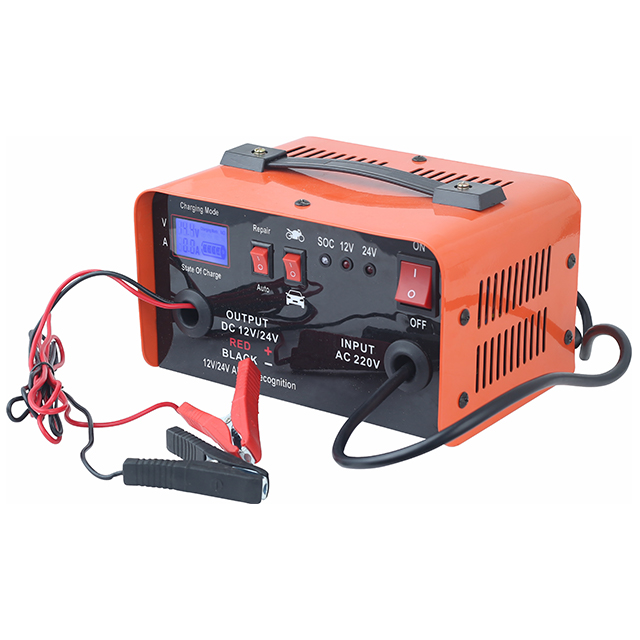
The multi-stage algorithm connects directly to physical battery health. Preventing deep discharges stops the formation of hard sulfation. Preventing overcharging stops gassing, fluid loss, and grid corrosion. This precise management dramatically extends longevity. Operators routinely double or triple the usable lifespan of standard lead-acid units by implementing strict maintenance charging protocols. By maintaining optimal specific gravity in the electrolyte, the internal lead plates remain clean and active. Consistent maintenance charging also prevents the stratification of battery acid—a condition where heavy acid sinks to the bottom of the case and water rises to the top, leading to rapid plate corrosion and premature failure in seasonal vehicles.
Different battery chemistries possess vastly different internal resistances and voltage requirements. An advanced Battery Charger adjusts voltage parameters to match these specific profiles. You only need one device to handle standard flooded batteries, AGM, Gel, and modern Lithium-ion (LiFePO4) upgrades. Lithium batteries require a very specific constant-current/constant-voltage algorithm and must never receive a high-voltage desulfation pulse, which would destroy their internal Battery Management System (BMS). Smart chargers either detect the chemistry automatically or provide dedicated selection modes. This future-proofs your maintenance toolkit as fleets and personal garages transition to newer battery technologies.
Battery Chemistry | Typical Absorption Voltage | Typical Float Voltage | Special Requirements |
|---|---|---|---|
Flooded Lead-Acid | 14.4V - 14.8V | 13.2V - 13.4V | Requires occasional equalization |
AGM (Absorbent Glass Mat) | 14.6V - 14.8V | 13.6V - 13.8V | Sensitive to overcharging |
Gel Cell | 14.1V - 14.4V | 13.5V - 13.8V | Requires lower peak voltage |
Lithium-ion (LiFePO4) | 14.4V - 14.6V | N/A (Often shuts off completely) | No desulfation pulses allowed |
Frame the benefit in terms of cost-per-cycle and environmental protection. Replacing a heavy-duty vehicle or marine battery every two years drains maintenance budgets rapidly. A smart charger eliminates this cycle. It keeps toxic lead-acid waste out of landfills and recycling centers. The financial savings of buying one smart unit versus replacing expensive batteries repeatedly are undeniable. You preserve the original hardware, maximize your initial investment, and reduce your environmental footprint simultaneously. Fleet managers see immediate reductions in their annual battery procurement budgets when they implement plug-in policies for idle equipment.
Convenience matters immensely in professional and daily applications. A maintained battery eliminates the frustration of morning jump-starts in freezing weather. Operators stop waiting for roadside assistance or tow trucks. You never miss critical operational windows due to a dead cell. Equipment remains ready for immediate deployment. For fleet managers, marine operators, and heavy equipment technicians, this reliability translates directly into saved time and reduced operational stress. You eliminate the downtime associated with diagnosing electrical failures, allowing technicians to focus on actual mechanical repairs rather than chasing dead batteries.
Connecting clamps backward used to cause dangerous sparks, melted terminals, and blown fuses. In modern vehicles, a reversed connection can instantly fry a vehicle's Electronic Control Unit (ECU), resulting in massive repair bills. Modern microprocessors detect incorrect terminal connections instantly. The charger sends a tiny, harmless test signal through the clamps. If it detects reverse voltage, the internal relays remain open. No current flows until the operator corrects the polarity. This protects both the user from physical harm and the vehicle from catastrophic electrical damage. Technicians can safely connect the clamps in dark, cramped engine bays without fear of short circuits.
Ambient temperature heavily affects a battery's charge acceptance. Cold batteries possess higher internal resistance and need higher voltage to reach full capacity. Hot batteries accept charge easily but require lower voltage to prevent thermal runaway and boiling. Built-in temperature sensors adjust the charge rate automatically based on the surrounding climate. These dynamic thermal compensation features ensure full beneficial charging in freezing winter conditions. They also prevent severe damage during extreme summer heat waves. This guarantees that the battery receives the exact voltage required for its current physical state, preventing seasonal battery failures.
Safety is non-negotiable when dealing with high-amperage electrical equipment left unattended for weeks. Shortlist chargers with recognized safety certifications like UL, CE, and FCC. These marks ensure compliance with strict workplace and residential safety standards. They guarantee the internal components can handle sustained electrical loads without melting or catching fire. Certified units undergo rigorous testing for electromagnetic interference, casing durability, and thermal stability. Never compromise on safety certifications when selecting equipment that operates unattended in garages, warehouses, or marine environments.
An automatic unit costs more initially than a basic trickle charger found in discount auto parts stores. Frame this against the guaranteed cost of premature battery replacement. One saved battery easily pays for the charger. Factor in the avoidance of roadside service fees, towing charges, and lost productivity from sidelined equipment. The initial investment secures a reliable maintenance system that operates for years. When you calculate the extended lifespan of multiple batteries across a fleet or personal garage, the return on investment becomes highly favorable within the first year of use.
Faster is not always better when restoring depleted batteries. Rapid, high-amperage manual charging (like using a 50-amp wheel charger) generates excessive internal heat. Heat degrades internal plates, warps the lead structures, and boils the electrolyte. A slower, computer-controlled automatic charge yields better long-term health. It allows the chemistry to absorb energy safely and efficiently without thermal stress. While a smart charger might take 12 to 24 hours to bring a completely dead battery to 100%, it ensures the battery retains that capacity without suffering internal physical damage.
Evaluate your specific operational needs. Highly programmable professional units require technical knowledge to set specific voltage parameters, amperage limits, and equalization schedules. Plug-and-play consumer smart chargers offer limited customizability but feature a zero learning curve. Choose based on who will operate the equipment daily. If multiple untrained operators need to connect vehicles at the end of a shift, a fully automatic plug-and-play unit minimizes user error. If you manage a specialized battery bank for solar storage or custom marine applications, a programmable unit offers necessary granular control.
Using a charger with too low an output for a large battery bank causes timeout errors. The charger's software assumes the battery is defective because the voltage rises too slowly during the bulk phase, causing it to abort the charge. Conversely, using too high an output for a small battery risks heat damage and rapid gassing.
Match the charger amperage to the battery's Amp-Hour (Ah) rating.
Aim for a 10% to 20% ratio. A 100Ah battery pairs perfectly with a 10A to 20A charger.
Always check the manufacturer's recommended capacity range before purchasing to ensure the software algorithms align with your battery size.
Most automatic units will not detect a battery that falls below a specific voltage threshold, typically 2 to 3 volts. The microprocessor assumes no battery is connected or assumes a dead short exists. It prevents the main relay from closing, stopping the charge cycle from starting.
Look for chargers with a specific Force Mode or Supply Mode.
This feature allows you to manually bypass the minimum voltage detection for a short period.
It pushes a low, steady current to raise the battery voltage just enough for the automatic detection to take over and revive the dead battery safely.
Using indoor-rated chargers in harsh outdoor or marine environments leads to internal corrosion, water ingress, and dangerous short circuits. Standard plastic casings cannot withstand rain, heavy shop dust, or salt spray.
Specify the need for IP65 or higher water and dust resistance ratings for any outdoor applications.
Ensure the casing features sealed seams, potted electronics, and protected ports.
Verify the AC and DC cables utilize heavy-duty, cold-weather insulation that won't crack in freezing temperatures.
Audit your current vehicles or equipment to determine the exact battery chemistry and Ah capacity before purchasing maintenance equipment.
Discard unregulated manual trickle chargers immediately to prevent accidental overcharging, boiled electrolytes, and fire hazards in your storage areas.
Procure a smart charger rated for your specific environmental conditions, ensuring appropriate IP ratings for outdoor or marine use.
Connect the automatic charger during any storage period exceeding one week to neutralize parasitic drain and prevent hard sulfation.
A: Yes. High-quality automatic chargers feature a float or maintenance mode. Once the battery reaches 100% capacity, the charger drops the voltage to a safe resting level. It monitors the battery and only delivers current when the voltage drops, preventing overcharging and boiling.
A: A basic trickle charger delivers a continuous, unregulated low amperage regardless of the battery's charge state, which can lead to overcharging. An automatic smart charger uses a microprocessor to monitor internal resistance, adjusting the current dynamically and shutting off active charging when full.
A: Standard automatic chargers often fail to detect batteries below 2-3 volts for safety reasons. However, advanced models feature a Force Mode that bypasses this safety check, pushing a low current to raise the voltage until the automatic detection can take over and revive it.
A: Yes. EVs and hybrids still utilize standard 12V batteries to power onboard electronics, computers, and accessory systems. An automatic charger safely maintains this 12V battery during long periods of inactivity, preventing parasitic drain from disabling the vehicle's startup sequence.
A: A general rule is to select a charger that delivers 10% to 20% of the battery's Amp-Hour (Ah) rating. For a standard 50Ah to 70Ah car battery, a 5-Amp to 10-Amp automatic charger provides an optimal balance of charging speed and thermal safety.
A: Yes, provided the charger supports those specific chemistries. AGM and Lithium-ion batteries require different voltage thresholds and charging algorithms than standard flooded lead-acid batteries. Always select a charger with dedicated AGM and Lithium modes to prevent internal damage.
